Circuit training offers a dynamic and efficient approach to fitness, combining strength training with cardiovascular work in a structured format. This comprehensive guide delves into the fundamentals, providing a detailed roadmap for designing and executing effective circuit routines, tailored to various fitness levels and goals. From beginners to advanced athletes, this resource offers practical strategies and insights to maximize your circuit training experience.
The guide covers everything from basic circuit design principles to advanced techniques, including supersets and plyometrics. It also provides specific workout routines for weight loss, muscle gain, cardiovascular improvement, flexibility, and core strength. The importance of proper form, safety considerations, and the role of nutrition and recovery are also addressed.
Introduction to Circuit Training
Circuit training is a type of workout that involves a series of exercises performed sequentially, with minimal rest between each exercise. It’s a highly effective method for building both strength and endurance. This approach allows for a full-body workout in a shorter time frame, making it a convenient option for busy individuals. It also promotes calorie burning and improved cardiovascular health.Circuit training offers numerous benefits for fitness enthusiasts.
It can help improve muscular strength and endurance, enhance cardiovascular fitness, and promote fat loss. It also provides a challenging and dynamic workout that can help prevent boredom and maintain motivation.
Definition of Circuit Training
Circuit training is a structured exercise program that involves performing a series of exercises in a predetermined order, with little or no rest between each exercise. This method typically focuses on multiple muscle groups, leading to a comprehensive workout in a relatively short period.
Key Benefits of Circuit Training
Circuit training offers a multitude of benefits for overall fitness. It helps to improve muscular strength and endurance, enhance cardiovascular fitness, and contribute to fat loss. It also promotes metabolic rate and helps maintain a healthy weight. The dynamic nature of the workout can improve motivation and prevent boredom.
Types of Circuit Training Programs
Different circuit training programs cater to various fitness levels and goals. These programs can be categorized based on intensity, equipment used, and the specific muscle groups targeted. Some common types include:
- High-intensity circuit training (HIIT): This type involves short bursts of intense exercise followed by brief recovery periods. It’s highly effective for burning calories and improving cardiovascular fitness.
- Low-intensity circuit training: This type involves a slower pace, focusing on controlled movements and proper form. It’s suitable for beginners or individuals recovering from injuries.
- Bodyweight circuit training: This approach utilizes body weight as resistance, making it accessible to those with limited equipment. It emphasizes functional strength and core stability.
- Strength circuit training: This type focuses on building muscular strength and power, using weights or resistance bands. It is designed to maximize muscle growth and hypertrophy.
Equipment Typically Used in Circuit Training
A wide array of equipment can be incorporated into circuit training routines, allowing for flexibility and customization. The specific equipment utilized depends on the type of circuit training program and the individual’s preferences.
- Free weights: Dumbbells, barbells, kettlebells, and medicine balls offer variable resistance levels and work different muscle groups.
- Resistance bands: These are versatile tools for resistance training, allowing for adjustments to intensity. They are also portable and space-saving.
- Bodyweight exercises: Exercises like push-ups, squats, and lunges are effective for building strength and endurance, without requiring any equipment.
- Cardio machines: Treadmills, stationary bikes, and ellipticals can be incorporated into circuit training routines to increase cardiovascular fitness.
Simple Circuit Training Workout for Beginners
This circuit training workout is designed for beginners and can be adapted to individual needs. It focuses on major muscle groups and emphasizes proper form over speed.
- Warm-up (5 minutes): Light cardio, dynamic stretches (arm circles, leg swings).
- Workout Circuit (12-15 minutes):
- Squats: 3 sets of 10-12 repetitions, 1 minute rest between sets.
- Push-ups (modified on knees if needed): 3 sets of as many repetitions as possible (AMRAP), 1 minute rest between sets.
- Lunges: 3 sets of 10-12 repetitions per leg, 1 minute rest between sets.
- Plank: 3 sets, hold for 30-60 seconds, 1 minute rest between sets.
- Burpees: 3 sets of 8-10 repetitions, 1 minute rest between sets.
- Cool-down (5 minutes): Static stretches, holding each stretch for 20-30 seconds.
Comparison of High-Intensity and Low-Intensity Circuit Training
| Feature | High-Intensity Circuit Training | Low-Intensity Circuit Training |
|---|---|---|
| Intensity | High | Low |
| Rest periods | Short | Longer |
| Exercises | Often more complex and challenging | Often simpler and easier to perform |
| Suitable for | Experienced individuals seeking a challenging workout | Beginners or individuals recovering from injuries |
| Impact on heart rate | Significantly increases heart rate | Moderately increases heart rate |
| Calorie burn | Higher calorie burn potential | Lower calorie burn potential |
Designing an Effective Circuit
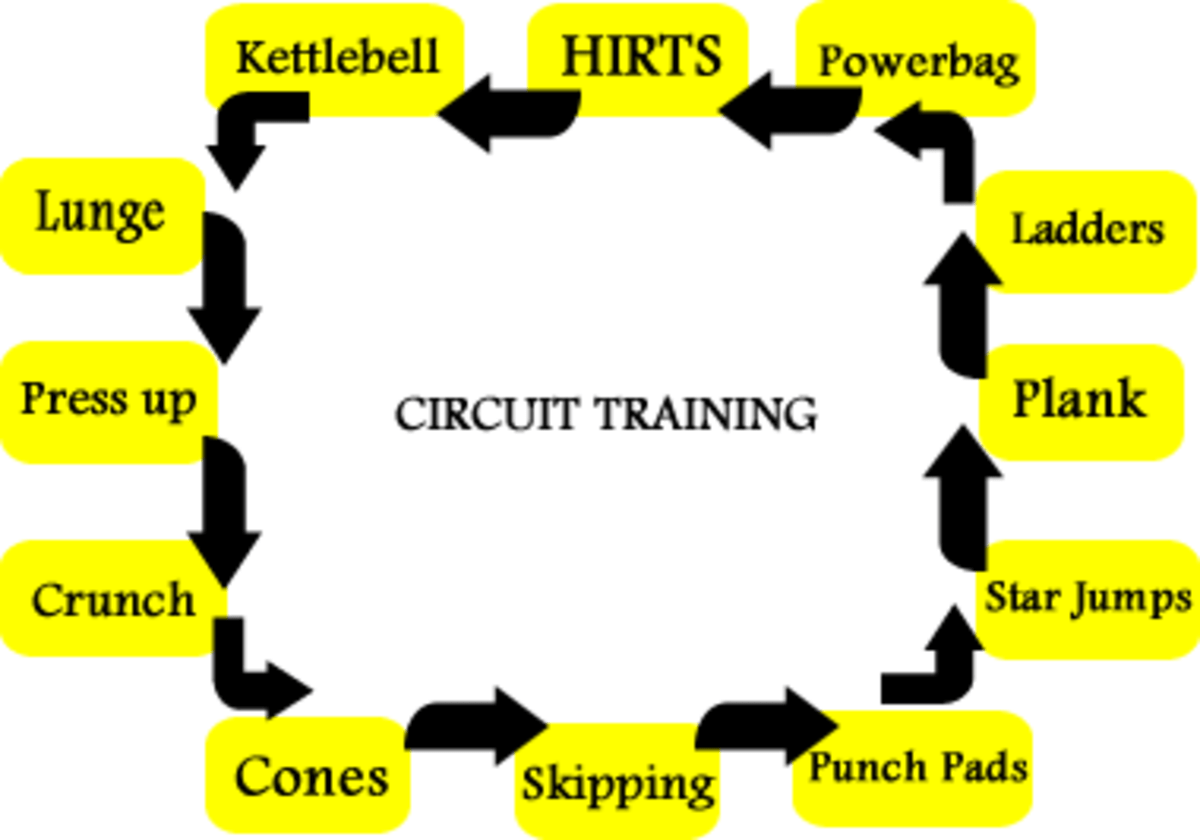
Designing an effective circuit workout involves careful consideration of progression, exercise selection, and workout structure. A well-structured circuit can maximize results by targeting specific muscle groups while promoting efficient calorie burning and improved overall fitness. This approach prioritizes a balanced workout experience, allowing for adaptation and progression over time.Understanding the principles of progression is crucial for adapting the circuit to individual fitness levels and goals.
By strategically adjusting variables like exercise selection, intensity, and rest periods, individuals can gradually increase the demands on their bodies, fostering continuous improvement. Choosing the right exercises plays a vital role in achieving targeted fitness goals, whether it’s building strength, increasing endurance, or enhancing cardiovascular health.
Principles of Progression in Circuit Training
Progressive overload is a fundamental principle in circuit training. Gradually increasing the intensity, volume, or duration of exercises allows the body to adapt and improve its performance. This could involve adding more repetitions, increasing the weight lifted, shortening rest periods, or incorporating more challenging variations of exercises. Consistency and gradual adjustments are key to seeing meaningful results.
Choosing Exercises for a Circuit
Exercise selection should align with fitness goals. For building strength, compound exercises are more suitable. Compound exercises engage multiple muscle groups simultaneously, leading to greater strength gains. For targeted muscle development, isolation exercises are essential. Isolation exercises focus on a specific muscle group, promoting muscle hypertrophy and sculpting desired physique features.
Structuring a Circuit Workout for Specific Muscle Groups
Designing a circuit workout involves grouping exercises targeting similar muscle groups. This arrangement allows for efficient blood flow to the target muscles and helps avoid overtraining specific areas. A well-structured circuit allows for proper rest and recovery between sets, promoting muscle repair and growth. For instance, a circuit focusing on lower body strength might include squats, lunges, and calf raises.
Examples of Compound and Isolation Exercises
Compound exercises, like squats, deadlifts, bench presses, and rows, engage multiple muscle groups simultaneously, making them ideal for building overall strength and power. Isolation exercises, like bicep curls, triceps extensions, lateral raises, and hamstring curls, target specific muscle groups, facilitating focused development. Proper form is paramount in both types of exercises.
Exercise Variations for Different Body Parts
| Body Part | Compound Exercise | Isolation Exercise |
|---|---|---|
| Lower Body | Barbell Back Squats, Romanian Deadlifts, Lunges | Leg Extensions, Hamstring Curls, Calf Raises |
| Upper Body | Bench Press, Overhead Press, Bent-Over Rows | Bicep Curls, Triceps Pushdowns, Lateral Raises |
| Core | Plank, Crunches, Russian Twists | Hanging Leg Raises, Bicycle Crunches, Reverse Crunches |
Importance of Proper Form and Technique
Maintaining proper form and technique during circuit training exercises is critical for preventing injuries and maximizing results. Correct form ensures that the targeted muscles are engaged effectively, minimizing the risk of strain or tears. Improper form can lead to injuries and hinder progress. A qualified fitness professional can guide individuals on correct form.
Progressive Overload Strategy
A progressive overload strategy for circuit training involves gradually increasing the intensity or volume of the workout over time. This could involve adding more repetitions, increasing the weight lifted, shortening rest periods, or increasing the number of circuits. Consistent application of this strategy leads to continuous improvement and adaptation. For example, starting with 10 repetitions of squats and progressively increasing to 15 repetitions in subsequent workouts demonstrates progressive overload.
Circuit Training Exercises
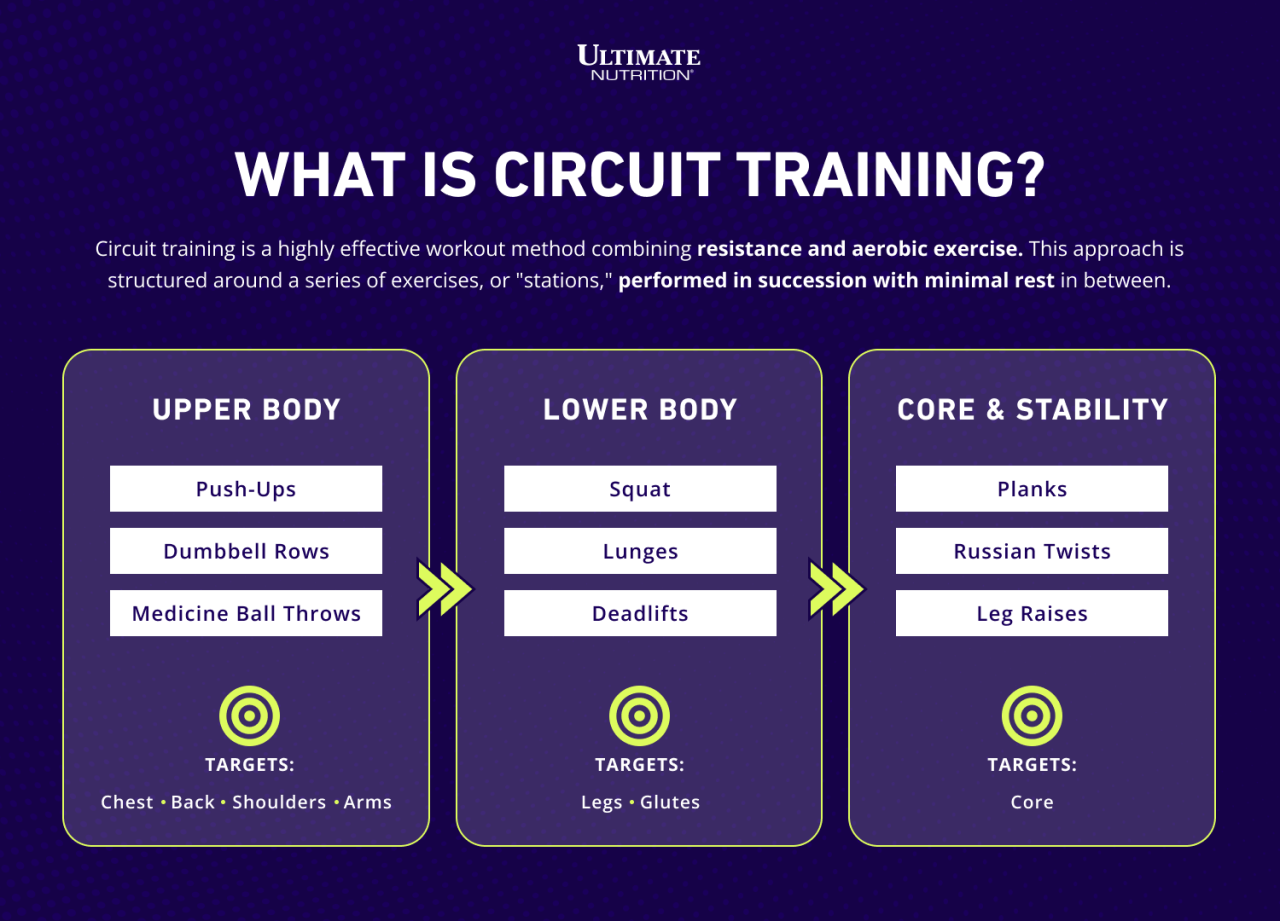
Circuit training, as a method of exercise, offers a structured approach to physical fitness. It efficiently combines various exercises into a routine, maximizing workout effectiveness and minimizing downtime between sets. This section will explore a variety of exercises suitable for circuit training, highlighting their benefits, proper form, variations for different fitness levels, and a sample circuit workout.This section delves into the specifics of incorporating different exercises into a circuit training program.
We will examine the benefits each exercise provides in a high-intensity, circuit-based workout, along with instructions for performing them correctly and safely. Furthermore, we’ll consider adaptations for various fitness levels, making circuit training accessible to a wider audience.
Exercises for a Circuit Training Routine
A well-designed circuit training routine incorporates exercises targeting different muscle groups. This approach maximizes the overall workout effect, ensuring balanced development. These exercises will be categorized by muscle group, enabling you to create targeted routines.
Exercises Targeting the Upper Body
These exercises primarily target the muscles of the chest, shoulders, and back, contributing to upper body strength and endurance.
- Push-ups: A fundamental exercise, push-ups work the chest, shoulders, and triceps. They enhance upper body strength and core stability. Proper form involves maintaining a straight line from head to heels, keeping the core engaged, and ensuring the elbows track towards the sides. Variations include incline push-ups (easier) and decline push-ups (more challenging).
- Dumbbell Bench Press: This exercise targets the chest, shoulders, and triceps. Holding dumbbells, lie on a bench with a controlled movement. The exercise increases strength and builds muscle mass. Proper form involves maintaining a neutral spine, controlling the weight, and keeping the elbows at a 45-degree angle. Variations include using lighter weights for fewer repetitions or more challenging weights for fewer repetitions.
- Bent-over Rows: Targeting the back muscles, including the latissimus dorsi, this exercise improves posture and back strength. Maintaining a controlled movement, using dumbbells or a barbell, is crucial. Proper form involves a straight back, engaging the core, and pulling the weight towards the chest. Variations include seated rows (easier) or using heavier weights for more challenging workouts.
Exercises Targeting the Lower Body
These exercises focus on the legs and glutes, strengthening these essential muscle groups.
- Squats: A compound exercise, squats work the quadriceps, glutes, and hamstrings. Proper form involves maintaining a straight back, lowering the hips as if sitting in a chair, and ensuring the knees do not extend beyond the toes. Variations include goblet squats (easier) or jump squats (more challenging).
- Lunges: This exercise isolates the quadriceps and glutes. A controlled step forward, maintaining a 90-degree angle in the front knee, is essential. Variations include walking lunges (easier) or reverse lunges (more challenging).
- Calf Raises: This exercise focuses on the calf muscles, contributing to ankle strength and stability. Raising the heels while keeping the core engaged is important. Variations include seated calf raises (easier) or standing calf raises with added weight (more challenging).
Sample Circuit Workout
This example routine targets all major muscle groups. Adjust sets, reps, and rest times to suit your fitness level and goals.
| Exercise | Sets | Reps | Rest (seconds) |
|---|---|---|---|
| Push-ups | 3 | 8-12 | 60 |
| Dumbbell Bench Press | 3 | 8-12 | 60 |
| Bent-over Rows | 3 | 10-15 | 60 |
| Squats | 3 | 10-15 | 60 |
| Lunges | 3 | 10-12 per leg | 60 |
| Calf Raises | 3 | 15-20 | 30 |
Circuit Training for Specific Goals
Circuit training offers a versatile approach to fitness, allowing for customization to achieve specific goals. Tailoring your circuit routine is key to maximizing results. This section delves into modifying circuit training for weight loss, muscle gain, cardiovascular improvement, flexibility, and core strength, providing practical examples and insights.
Weight Loss Circuit
A weight loss circuit emphasizes calorie expenditure and metabolic boost. Focus on high-intensity exercises, such as burpees, jump squats, and mountain climbers, performed in rapid succession with minimal rest periods. Incorporate compound exercises that engage multiple muscle groups to maximize calorie burn.
- High-Intensity Intervals: Include exercises like jump squats, burpees, and mountain climbers, performed in 30-second intervals followed by 15-second rest. Repeat this sequence for 10-12 minutes.
- Compound Exercises: Incorporate squats, lunges, push-ups, and rows to engage multiple muscle groups. Perform 10-12 repetitions for each exercise.
- Cardiovascular Integration: Include activities like rowing, running, or cycling to enhance calorie expenditure and cardiovascular fitness.
Muscle Gain Circuit
For muscle growth, prioritize compound exercises, which engage multiple muscle groups. Emphasize progressive overload, increasing the weight or resistance over time to stimulate muscle growth. Adequate rest periods are essential for muscle recovery and repair.
- Compound Exercises: Focus on squats, deadlifts, bench presses, overhead presses, and rows. Use weights that allow for 8-12 repetitions per set.
- Progressive Overload: Gradually increase the weight, reps, or sets over time to challenge your muscles.
- Proper Form: Maintain proper form to prevent injuries and maximize effectiveness.
Cardiovascular Fitness Circuit
A circuit for cardiovascular fitness should incorporate continuous movement and high-intensity intervals. This will elevate your heart rate, promoting cardiovascular health. Ensure proper warm-up and cool-down periods to prevent injuries.
- High-Intensity Intervals: Alternate between high-intensity exercises (e.g., sprinting, jumping jacks) and low-intensity exercises (e.g., walking) in timed intervals.
- Sustained Cardio: Include activities like running, swimming, or cycling for extended durations to build endurance.
- Proper Breathing: Maintain a consistent breathing pattern during the circuit to maintain optimal oxygen intake.
Flexibility and Mobility Circuit
Flexibility and mobility circuits focus on dynamic stretching and range of motion exercises. This improves joint health and reduces the risk of injury. Include a variety of stretches targeting different muscle groups.
- Dynamic Stretching: Include arm circles, leg swings, torso twists, and high knees to improve blood flow and range of motion.
- Static Stretching: Hold stretches for 20-30 seconds to improve flexibility in major muscle groups.
- Joint Mobilization: Incorporate exercises to improve joint mobility and reduce stiffness, such as wrist rotations and ankle circles.
Circuit Training Routines for Different Fitness Levels and Goals
The following table provides examples of circuit training routines tailored for various fitness levels and goals. Adjust the intensity and duration based on your individual needs.
| Fitness Level | Goal | Circuit Example |
|---|---|---|
| Beginner | Weight Loss | 30 seconds of jumping jacks, 15 seconds rest; 30 seconds of high knees, 15 seconds rest; 30 seconds of burpees, 15 seconds rest; repeat for 10-12 minutes. |
| Intermediate | Muscle Gain | 3 sets of squats (10-12 reps), 1 minute rest; 3 sets of push-ups (as many reps as possible), 1 minute rest; 3 sets of rows (10-12 reps), 1 minute rest; repeat the entire circuit 2-3 times. |
| Advanced | Cardiovascular Fitness | Alternating 30 seconds of sprinting, 1 minute of brisk walking; repeat for 20-30 minutes. |
Core Strength Circuit
A core strength circuit targets abdominal muscles, back muscles, and obliques. This improves stability, posture, and overall strength.
- Plank Variations: Perform standard planks, side planks, and forearm planks for 30-60 seconds each.
- Crunches and Leg Raises: Include variations of crunches and leg raises to work different areas of the core.
- Russian Twists: Perform Russian twists with a weight or medicine ball to engage the obliques.
Nutrition and Recovery
Proper nutrition and recovery are crucial for achieving fitness goals with circuit training. Consume a balanced diet rich in protein, carbohydrates, and healthy fats to fuel your workouts and support muscle recovery. Adequate sleep and rest are vital for muscle repair and overall well-being.
Circuit Training Safety and Considerations
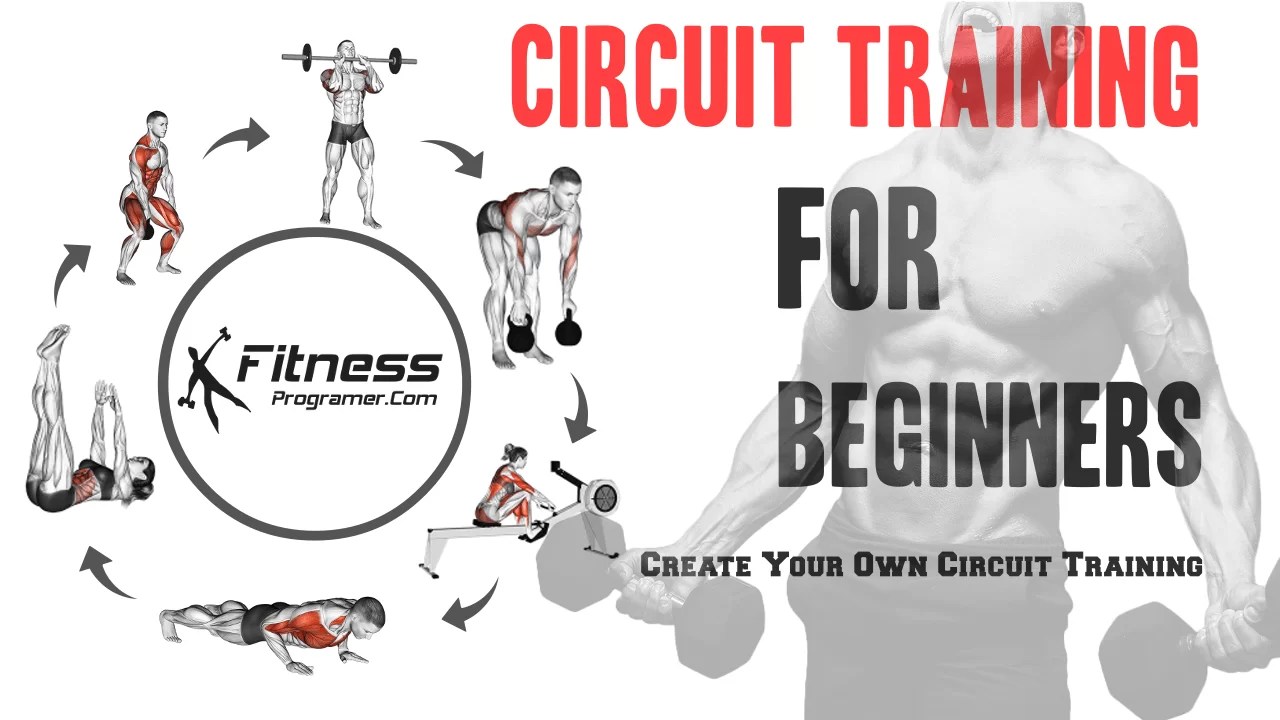
Circuit training offers a dynamic and effective way to improve fitness, but prioritizing safety is paramount. Understanding the importance of proper warm-up and cool-down routines, monitoring intensity, and recognizing potential risks is crucial for injury prevention and maximizing the benefits of your workouts. By implementing these safety measures, you can experience a more enjoyable and sustainable fitness journey.Effective circuit training requires careful attention to safety protocols.
Ignoring these considerations can lead to injuries, hindering progress and potentially causing long-term discomfort. This section provides essential guidelines to help you approach circuit training with a focus on well-being and optimal results.
Warm-up and Cool-down Routines
Adequate warm-up and cool-down routines are essential components of any exercise program, including circuit training. A proper warm-up prepares the body for the demands of the workout by increasing blood flow to muscles, raising body temperature, and improving flexibility. A cool-down, conversely, gradually reduces heart rate and blood pressure, promoting recovery and preventing muscle soreness.A typical warm-up routine might include 5-10 minutes of light cardio, such as brisk walking or jogging, followed by dynamic stretching exercises like arm circles, leg swings, and torso twists.
Cool-down should involve static stretching, holding each stretch for 15-30 seconds, targeting major muscle groups worked during the circuit.
Monitoring Intensity and Exertion
Precisely monitoring intensity and exertion is crucial for maximizing results and preventing overtraining. The most effective way to monitor intensity is through the Perceived Exertion Scale (RPE). This scale, ranging from 6 (very light) to 20 (maximal), provides a subjective measure of how hard you feel you are working. Maintaining an RPE of 12-16 during the circuit is generally ideal for most individuals.
A higher or lower intensity may be appropriate for individuals with specific fitness goals and training experience.
Preventing Injuries During Circuit Training
Proper form and technique are essential for injury prevention. Consult with a certified fitness professional for proper exercise form and technique demonstrations. This is particularly important for beginners. Using proper form reduces stress on joints and minimizes the risk of strains and sprains. Prioritize controlled movements, avoiding jerky motions and excessive force.
Ensure that you have appropriate footwear and exercise equipment in good condition. Proper footwear provides stability and support, while well-maintained equipment helps prevent accidents.
Warning Signs of Overtraining
Overtraining can significantly hinder progress and lead to burnout or injuries. Pay close attention to these warning signs, including persistent fatigue, decreased performance, mood swings, irritability, insomnia, and increased susceptibility to illness. If these symptoms persist, it is crucial to consult with a healthcare professional to assess the situation and determine the appropriate course of action. Listening to your body and allowing for adequate rest and recovery are vital components of a safe and effective training regimen.
Modifying Exercises for Injuries or Limitations
Modifying exercises is crucial for accommodating individuals with injuries or limitations. For instance, if you have a knee injury, you might need to modify squats by performing them on a slightly elevated surface or using resistance bands. If you have limited mobility, you may need to adjust the range of motion or the intensity of the exercise. Remember, modifying exercises is not a sign of weakness; rather, it is a sign of smart training and an approach to fitness that considers individual needs.
Staying Motivated and Consistent
Staying motivated and consistent with a circuit training program requires careful planning and a structured approach. Setting realistic goals, creating a supportive environment, and tracking progress are key strategies for maintaining motivation. Consider joining a fitness group or partnering with a workout buddy to boost accountability and motivation. Celebrate milestones and acknowledge progress, both big and small.
Hydration and Nutrition
Proper hydration and nutrition are essential for supporting your body during and after a circuit workout. Drink plenty of water throughout the day, especially before, during, and after your workout. Consuming a balanced diet with adequate protein, carbohydrates, and healthy fats is crucial for muscle repair and recovery. Fueling your body properly will allow you to perform at your best and recover optimally.
Circuit Training Routines and Variations
Circuit training offers a versatile approach to fitness, allowing for customization based on individual goals, available equipment, and physical limitations. This section delves into various circuit training routines, providing practical examples for diverse needs and preferences. Different routines cater to various fitness levels and goals, from building strength to improving cardiovascular health.
30-Minute Circuit Workout Plan
This routine is designed for a moderate fitness level and can be adjusted based on individual capabilities. Warm-up for 5 minutes before starting the circuit. Rest between exercises for 60 seconds. Cool-down with stretching for 5 minutes.
- Exercise 1: Squats (3 sets of 12-15 repetitions)
- Exercise 2: Push-ups (3 sets of as many repetitions as possible)
- Exercise 3: Lunges (3 sets of 10-12 repetitions per leg)
- Exercise 4: Plank (3 sets, hold for 30-60 seconds)
- Exercise 5: Burpees (3 sets of 10-12 repetitions)
- Exercise 6: Bicycle Crunches (3 sets of 15-20 repetitions per side)
- Exercise 7: Glute Bridges (3 sets of 15-20 repetitions)
Circuit Training Routine for Limited Equipment
This routine utilizes readily available household items or bodyweight exercises for a challenging full-body workout. Focus on proper form over the number of repetitions.
- Exercise 1: Bodyweight Squats (3 sets of 12-15 repetitions)
- Exercise 2: Push-ups (modified on knees if needed, 3 sets of as many repetitions as possible)
- Exercise 3: Walking Lunges (3 sets of 10-12 repetitions per leg)
- Exercise 4: Plank (3 sets, hold for 30-60 seconds)
- Exercise 5: Jumping Jacks (3 sets of 20-30 repetitions)
- Exercise 6: Crunches (3 sets of 15-20 repetitions)
- Exercise 7: Glute Bridges (3 sets of 15-20 repetitions)
Bodyweight Circuit Training Routine
This routine uses only your body weight for resistance, making it suitable for individuals with no equipment. Consistency is key to building strength and endurance.
- Exercise 1: Burpees (3 sets of 10-12 repetitions)
- Exercise 2: Mountain Climbers (3 sets of 30 seconds)
- Exercise 3: Squats (3 sets of 15-20 repetitions)
- Exercise 4: Push-ups (modified on knees if needed, 3 sets of as many repetitions as possible)
- Exercise 5: Lunges (3 sets of 10-12 repetitions per leg)
- Exercise 6: Plank (3 sets, hold for 30-60 seconds)
- Exercise 7: Triceps Dips (using a chair or bench, 3 sets of 10-12 repetitions)
Circuit Training Routine Incorporating Resistance Bands
Resistance bands provide a versatile tool for adding resistance to bodyweight exercises. Choose a band with appropriate resistance for your strength level.
- Exercise 1: Band Squats (3 sets of 12-15 repetitions)
- Exercise 2: Band Rows (3 sets of 10-12 repetitions per arm)
- Exercise 3: Band Lunges (3 sets of 10-12 repetitions per leg)
- Exercise 4: Band Push-ups (3 sets of as many repetitions as possible)
- Exercise 5: Band Bicep Curls (3 sets of 12-15 repetitions)
- Exercise 6: Band Triceps Extensions (3 sets of 12-15 repetitions)
- Exercise 7: Band Glute Bridges (3 sets of 15-20 repetitions)
Circuit Training Workout for Older Adults
This routine focuses on low-impact exercises, promoting balance, and building strength gradually. Consult a physician before starting any new exercise program.
- Exercise 1: Chair Squats (3 sets of 10-12 repetitions)
- Exercise 2: Wall Push-ups (3 sets, as many repetitions as possible)
- Exercise 3: Walking Lunges (3 sets of 5-8 repetitions per leg)
- Exercise 4: Seated Rows (using resistance bands or light weights, 3 sets of 10-12 repetitions)
- Exercise 5: Arm Circles (forward and backward, 3 sets of 10-15 repetitions per direction)
- Exercise 6: Chair Dips (3 sets, as many repetitions as possible)
- Exercise 7: Balance exercises (3 sets, hold for 30 seconds each)
Equipment-Free Circuit Workouts
This table provides a sample of equipment-free circuit workouts, offering different exercise options. Adjust sets and repetitions based on fitness level.
| Workout | Exercise | Sets | Repetitions |
|---|---|---|---|
| Workout 1 | Squats | 3 | 12-15 |
| Push-ups (modified) | 3 | As many as possible | |
| Lunges | 3 | 10-12 per leg | |
| Plank | 3 | 30-60 seconds |
Modifying a Circuit Routine for Pregnant Women
Pregnant women should consult their healthcare provider before starting any new exercise program. Focus on modifications that maintain proper form and avoid straining abdominal muscles.
- Modify exercises to reduce impact and intensity.
- Avoid exercises that place excessive pressure on the abdomen.
- Listen to your body and stop if you feel pain or discomfort.
- Prioritize exercises that improve posture and core stability.
- Modify exercises that involve lying on your back to exercises performed on your side or incline to avoid pressure on the vena cava.
Advanced Circuit Training Concepts
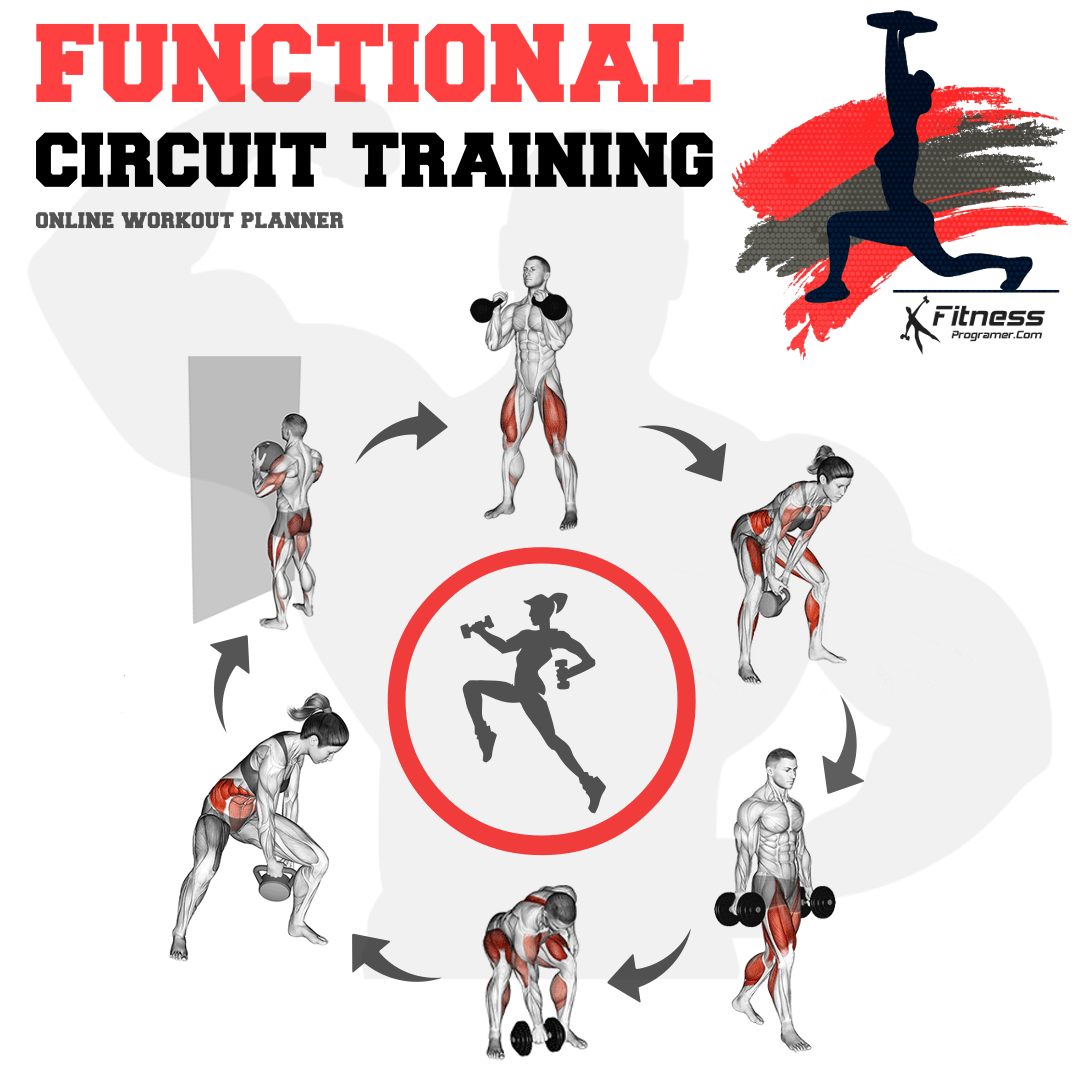
Circuit training, while effective for beginners, can be further optimized for advanced users. This section delves into advanced concepts like supersets and compound sets, the strategic use of varied rep ranges, plyometrics, rest intervals, and progressive overload to enhance results and challenge the body.Advanced circuit training builds upon the foundation of basic circuit training, allowing for more complex and targeted workouts that accommodate individual progress and strive for greater fitness gains.
Supersets and Compound Sets
Supersets and compound sets are advanced techniques that increase workout intensity and time efficiency. Supersets involve performing two exercises back-to-back with minimal rest between them, targeting different muscle groups. Compound sets, on the other hand, involve performing multiple exercises targeting the same muscle group without rest. These techniques are crucial for pushing the body beyond its current limits and achieving more significant gains.
Varying Rep Ranges
Different rep ranges stimulate the body in unique ways. Low-rep ranges (1-5 repetitions) emphasize strength and power, while medium-rep ranges (6-12 repetitions) promote muscle hypertrophy and strength. High-rep ranges (13+ repetitions) build endurance and muscular endurance. Integrating different rep ranges within a circuit training routine can help develop a more well-rounded fitness profile.
Plyometrics in Circuit Training
Plyometrics are explosive movements that enhance power and speed. Incorporating plyometrics into circuit training can significantly improve athletic performance. Examples include jump squats, box jumps, and depth jumps. These exercises are crucial for building power and explosiveness.
- Jump Squats: Stand with feet shoulder-width apart, lower into a squat, then explosively jump upward, landing softly.
- Box Jumps: Step onto a box with both feet, explosively jumping up, landing softly and controlled.
- Depth Jumps: Step off a box and land on the ground. Explosively jump up, focusing on power and speed.
Rest Intervals
Rest intervals in circuit training are crucial for recovery and preventing fatigue. Strategic rest periods can maximize the effectiveness of the workout. Variable rest intervals can be used for different exercise types, and rest times should be adjusted based on the intensity of the exercises. Adjusting rest intervals allows for a more dynamic workout experience.
- Short Rest Intervals (30-60 seconds): Ideal for exercises that target multiple muscle groups, promoting cardiovascular benefits.
- Moderate Rest Intervals (60-90 seconds): Suitable for exercises that demand significant exertion and recovery.
- Longer Rest Intervals (2-3 minutes): Essential for exercises requiring maximum effort and complete recovery.
Adjusting for Individual Progress
Circuit training routines should be adaptable to accommodate individual progress. As fitness levels improve, the intensity, duration, and exercises of the circuit can be adjusted. Monitoring performance indicators and modifying the workout accordingly is crucial for optimal results. This can be done by increasing the weight, adding more exercises, or increasing the intensity of the existing exercises.
Intensity and Duration Variation
Circuit training intensity and duration can be varied to prevent plateaus and maintain motivation. Increasing the number of circuits, the intensity of exercises, or the duration of the workout are examples of how intensity and duration can be adjusted. This ensures continued challenge and progressive improvement.
Progressive Overload in Advanced Circuit Training
Progressive overload is a fundamental principle in all forms of exercise, including circuit training. Advanced users should continually challenge their bodies by gradually increasing the intensity, volume, or duration of their workouts. This ensures continuous improvement and avoids stagnation. This could involve adding more weight, increasing the number of repetitions, or decreasing rest periods. This is vital for maximizing results.
Outcome Summary

In conclusion, this guide provides a robust framework for understanding and implementing circuit training effectively. By following the principles and routines Artikeld, you can design personalized programs that cater to your specific needs and aspirations. Remember that consistency, proper form, and a balanced approach to nutrition and recovery are crucial for achieving your fitness goals.