Jump rope workouts offer a dynamic and efficient way to improve cardiovascular health, build strength, and enhance coordination. This comprehensive guide delves into the fundamentals, from choosing the right jump rope to mastering advanced techniques. We’ll explore various workout types, tailored warm-up and cool-down routines, and essential safety precautions to ensure a safe and effective jump rope journey.
Whether you’re a seasoned athlete or a beginner, this guide provides a structured approach to jump rope workouts. We’ll break down the different techniques, from basic single and double jumps to more challenging moves like crossovers and high knees. Detailed explanations and step-by-step instructions will empower you to progress at your own pace, ensuring a positive and rewarding fitness experience.
Introduction to Jump Rope Workouts
Jump rope workouts offer a highly effective and versatile way to improve cardiovascular health, build strength, and enhance coordination. This dynamic exercise engages multiple muscle groups, promoting calorie burning and overall fitness. The simplicity of the equipment makes it accessible to people of all ages and fitness levels, from beginners to seasoned athletes.Jump ropes come in various types, each designed for different purposes and intensity levels.
Understanding these variations can help tailor workouts to specific goals and preferences. Proper technique is crucial for maximizing benefits and minimizing injury risk. Mastering the fundamental movements forms the bedrock for progressing to more complex routines.
Different Types of Jump Ropes
Jump ropes are available in a range of materials and designs, influencing their suitability for specific activities. Speed ropes, characterized by their lightweight construction and shorter handles, are ideal for high-intensity workouts focused on speed and agility. Traditional jump ropes, with their standard length and weight, are suitable for a broader range of exercises, from basic techniques to more advanced combinations.
Weighted jump ropes provide an additional resistance component, useful for strengthening muscles and increasing the intensity of the workout.
Basic Jump Rope Techniques and Movements
Mastering the fundamental jump rope techniques is paramount for effective and safe workouts. The basic jump involves alternating feet while maintaining a consistent rhythm. Alternating foot jumps are a fundamental technique, where you jump with each foot alternating, maintaining a consistent rhythm. Single-leg jumps are a progression, requiring coordination and balance, where you jump on one leg at a time.
Crossovers involve jumping over the rope as it passes in front of and behind your body, developing coordination and agility.
Jump Rope Workout Types
This table Artikels different jump rope workouts categorized by intensity and duration. Understanding the appropriate intensity and duration is vital for tailoring workouts to individual fitness levels.
| Workout Type | Intensity | Duration | Description |
|---|---|---|---|
| Beginner | Low | 10-15 minutes | Focus on mastering basic techniques like alternating foot jumps and maintaining a consistent rhythm. This phase builds foundational skills for future progression. |
| Intermediate | Medium | 15-20 minutes | Introduce more complex patterns like single-leg jumps and crossovers. This phase incorporates greater coordination and stamina demands. |
| Advanced | High | 20+ minutes | Incorporate advanced techniques and combinations such as double unders (jumping over the rope twice in each jump cycle) and high-speed jumps. This phase requires significant stamina and coordination, and can be tailored to individual performance goals. |
Warm-up and Cool-down Routines
Proper warm-up and cool-down routines are essential components of any exercise program, especially high-intensity activities like jump rope workouts. They prepare the body for the demands of the workout and aid in recovery afterward, minimizing the risk of injury and maximizing the benefits of the exercise. A well-structured warm-up gradually increases blood flow to the muscles, preparing them for the dynamic movements of jump rope.
A cool-down routine allows the body to transition back to a resting state, reducing muscle soreness and promoting recovery.A comprehensive warm-up routine is crucial for jump rope workouts to prepare the body for the intense physical demands. It gradually increases heart rate and body temperature, preventing injuries and optimizing performance. This preparation reduces the risk of strains, sprains, and other potential injuries associated with sudden movements and high-impact exercises.
Warm-up Routine for Jump Rope Workouts
This warm-up routine is designed to gradually increase heart rate, blood flow, and muscle temperature, preparing the body for the dynamic movements of jump rope. Each exercise should be performed for 30 seconds, allowing for a gradual increase in intensity and preventing muscle strain.
| Exercise | Description | Duration |
|---|---|---|
| Arm Circles | Rotating arms forward and backward in smooth, controlled motions. | 30 seconds |
| Leg Swings | Swinging legs forward and backward, maintaining a controlled and rhythmic motion. Focus on maintaining balance and avoiding jerky movements. | 30 seconds |
| Jumping Jacks | Jumping with arms and legs in a jack-knife motion. Maintain a controlled rhythm, ensuring proper form and avoiding sudden stops or starts. | 30 seconds |
| High Knees | Bringing knees up towards the chest while maintaining a steady pace. This exercise enhances leg strength and agility. | 30 seconds |
| Butt Kicks | Kicking heels towards the glutes, ensuring proper form and avoiding strain. This exercise warms up the hamstrings and glutes. | 30 seconds |
| Dynamic Torso Twists | Rotating the torso from side to side, maintaining a controlled pace. This exercise enhances core stability and flexibility. | 30 seconds |
Cool-down Routine for Post-Workout Recovery
A cool-down routine is just as important as the warm-up, allowing the body to transition back to a resting state gradually. This helps prevent blood pooling, promotes recovery, and reduces muscle soreness.This routine involves static stretches, holding each stretch for 30 seconds. This allows muscles to lengthen and relax, improving flexibility and reducing the risk of delayed-onset muscle soreness (DOMS).
- Static Arm Stretches: Extend one arm overhead, gently pulling it towards the opposite side of the body with the other hand. Hold for 30 seconds, repeating on the other side.
- Static Leg Stretches: Gently bend one leg at the knee, pulling it towards the chest and holding for 30 seconds. Repeat on the other side.
- Quadriceps Stretch: Grab one foot with the same hand, pulling it towards the buttocks and holding for 30 seconds. Repeat on the other side.
- Hamstring Stretch: Extend one leg straight out in front of you, reaching for your toes with a straight back. Hold for 30 seconds. Repeat on the other side.
- Calf Stretch: Stand with feet shoulder-width apart, placing one foot behind the other. Lean forward, keeping the front leg straight, and hold for 30 seconds. Repeat on the other side.
Importance of Warm-up and Cool-down Routines
Warm-up routines prepare the body for physical activity, increasing blood flow to muscles and raising body temperature, thus reducing the risk of injury and improving performance. Cool-down routines are essential for facilitating a smooth transition back to a resting state, preventing blood pooling, and aiding in recovery, reducing muscle soreness and promoting flexibility.
Basic Jump Rope Techniques
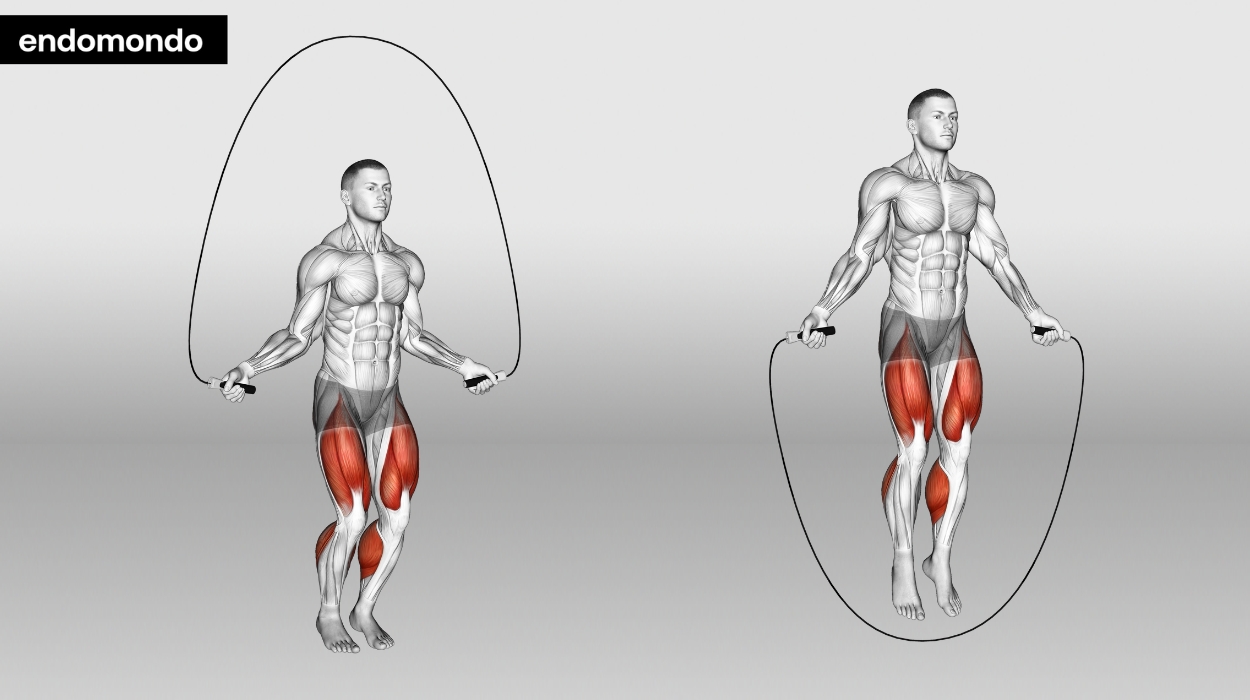
Mastering the fundamental jump rope techniques is crucial for building a strong foundation for more advanced routines. These techniques, including single jumps, double jumps, and alternating jumps, enhance coordination, cardiovascular fitness, and overall agility. Proper form and consistent practice are key to achieving efficiency and preventing injuries.
Single Jump Technique
The single jump is the foundational jump rope technique. It establishes the rhythm and coordination needed for more complex moves. Maintaining a consistent rhythm and proper form is essential for maximizing the benefits and minimizing the risk of injury.
To execute a single jump effectively, maintain a slight bend in your knees and a relaxed posture. Keep your core engaged to provide stability and control. The rope should swing naturally from your wrists, rather than forcing it. Your feet should land softly, allowing for a fluid and rhythmic jump.
Double Jump Technique
The double jump builds upon the single jump by requiring the jumper to jump twice over the rope during each revolution. This technique significantly improves speed and agility, enhancing your overall workout.
To perform a double jump, maintain the same posture and core engagement as the single jump. However, focus on a faster and more controlled swing of the rope. Your feet should make quick and decisive contact with the ground, allowing for two jumps per rope revolution. Practice maintaining a smooth rhythm to achieve efficiency.
Alternating Jump Technique
The alternating jump is a more advanced technique that involves alternating your feet when jumping over the rope. This improves coordination and balance, making the jump rope workout more dynamic.
To execute an alternating jump, maintain a slight bend in your knees and a relaxed posture. Keep your core engaged to provide stability. The rope should swing naturally from your wrists, rather than forcing it. When jumping, ensure that you alternate your feet, landing each foot independently. This will require coordination and practice.
Comparison of Jump Rope Techniques
| Technique | Description | Benefits |
|---|---|---|
| Single Jump | Jumping over the rope once per jump, maintaining a consistent rhythm. | Develops basic rhythm and coordination, building a foundation for more advanced techniques. |
| Double Jump | Jumping over the rope twice per jump, requiring a faster and more controlled rope swing. | Improves speed, agility, and cardiovascular fitness, leading to a more challenging workout. |
| Alternating Jump | Jumping over the rope with alternating feet, demanding greater coordination and balance. | Enhances coordination, balance, and agility, further developing your overall jump rope skills. |
Mastering Each Technique: Step-by-Step Guides
Consistent practice and proper form are essential for mastering each jump rope technique. These guides provide a structured approach to improving your skills.
Single Jump
- Stand with feet shoulder-width apart, knees slightly bent.
- Hold the rope with both hands, letting the rope swing naturally.
- Jump over the rope as it passes beneath your feet.
- Maintain a consistent rhythm and focus on smooth, controlled movements.
Double Jump
- Stand with feet shoulder-width apart, knees slightly bent.
- Hold the rope with both hands, swinging it with more speed and control.
- Jump twice over the rope as it passes beneath your feet.
- Focus on a quick, controlled rhythm, ensuring both jumps are executed smoothly.
Alternating Jump
- Stand with feet shoulder-width apart, knees slightly bent.
- Hold the rope with both hands, swinging it with more speed and control.
- Jump over the rope, alternating your feet with each jump. The left foot jumps over first, then the right foot.
- Focus on maintaining a consistent rhythm and a smooth transition between each jump.
Advanced Jump Rope Techniques
Mastering basic jump rope techniques lays the foundation for incorporating advanced moves. These more complex techniques enhance cardiovascular fitness, improve coordination, and increase the overall intensity of your workout. They also challenge your body to perform more intricate movements, pushing your limits in new ways.
Crossovers
Crossovers are a dynamic technique where you jump over the rope while alternating feet, crossing them in front of each other. This advanced move significantly increases the coordination and agility requirements compared to basic jumps. The crossing motion challenges your body’s balance and coordination.
- Execution: Maintain a consistent rhythm while jumping. Keep your knees slightly bent and focus on a smooth crossover motion. Ensure you are jumping high enough for the rope to pass under your feet.
- Benefits: Improved coordination and agility, increased cardiovascular fitness, and enhanced lower body strength.
- Example: Imagine you are stepping over a low hurdle, but with your feet. This continuous crossing motion will be an example of a crossover jump.
High Knees
High knees involve jumping over the rope while simultaneously bringing your knees up towards your chest. This technique enhances cardiovascular endurance and strengthens the muscles of the legs and core. The added movement also improves lower body power and explosive strength.
- Execution: Maintain a controlled pace and focus on bringing your knees high enough for the rope to pass under. Maintain a slight bend in your knees and engage your core.
- Benefits: Increased cardiovascular endurance, improved lower body strength, and enhanced core engagement.
- Example: Think of mimicking the motion of running in place but with a jump rope. The emphasis is on bringing the knees high during each jump.
V-Jumps
V-jumps are characterized by jumping over the rope while extending your legs outward into a V-shape. This demanding technique is highly effective for building explosive power and strength in your legs and core. The extended leg position significantly increases the intensity of the workout and enhances power output.
- Execution: Start with a slight bend in your knees, then propel yourself upwards, extending your legs straight out in a V-shape during the jump. This is a powerful jump, so ensure you are prepared for this technique.
- Benefits: Enhanced explosive power, increased lower body strength, and improved coordination.
- Example: Visualize yourself jumping high and pushing your legs outward in a V-shape while the rope passes under. The key is maintaining a strong and controlled form during the entire jump.
Comparison of Difficulty Levels
| Technique | Difficulty Level | Description |
|---|---|---|
| Crossovers | Medium | Jumping over the rope with alternating feet while crossing them |
| High Knees | Medium | Jumping over the rope while bringing knees high |
| V-Jumps | High | Jumping over the rope with legs extended into a V shape |
Jump Rope Workouts for Specific Goals

Jump rope workouts offer a versatile and effective way to achieve various fitness objectives. Tailoring your routine to your specific goals, whether it’s weight loss, muscle building, or cardio improvement, can significantly enhance your results. This section details structured routines for each goal, providing examples of exercises and repetitions to maximize effectiveness.Understanding the specific demands of each fitness goal is crucial for creating an effective jump rope workout.
Different approaches are needed for weight loss, muscle building, and cardio improvement, as these goals have varying physiological requirements. The routines Artikeld below provide a framework for building a personalized jump rope regimen that aligns with your objectives.
Weight Loss Workouts
High-intensity interval training (HIIT) is an effective approach for weight loss. HIIT workouts alternate between high-intensity periods and brief recovery periods, maximizing calorie burn and improving cardiovascular fitness. This method is particularly beneficial for individuals looking to shed excess weight quickly and efficiently.
| Interval | Activity | Duration |
|---|---|---|
| High Intensity | Jump rope at maximum speed | 30 seconds |
| Low Intensity | Light jogging or walking | 15 seconds |
Repeat the cycle for 20 minutes, adjusting the intervals based on your fitness level. Start with shorter high-intensity intervals and gradually increase the duration as you improve. Remember to maintain proper form throughout the workout to prevent injuries.
Muscle Building Workouts
Strength training with jump rope can effectively build muscle mass. This approach utilizes compound movements, engaging multiple muscle groups simultaneously. Focus on explosive jumps and variations in jump rope techniques to maximize muscle activation. Combining jump rope with bodyweight exercises or light weights can further enhance muscle development.
- Jumping Jacks with Jump Rope: Combine jumping jacks with jump rope for 30 seconds, followed by 15 seconds of rest. Repeat the cycle for 10 minutes.
- High Knees with Jump Rope: Perform high knees with jump rope for 30 seconds, followed by 15 seconds of rest. Repeat the cycle for 10 minutes.
- Butt Kicks with Jump Rope: Perform butt kicks with jump rope for 30 seconds, followed by 15 seconds of rest. Repeat the cycle for 10 minutes.
Incorporate these exercises into your strength training regimen for a comprehensive approach to muscle building.
Cardio Improvement Workouts
Endurance-based jump rope workouts are crucial for improving cardiovascular fitness. Sustained high-intensity jumps are key to improving endurance. Gradually increasing the duration and intensity of your workouts will lead to enhanced cardiovascular health. Remember to listen to your body and take rest days when needed to avoid overtraining.
- Continuous Jump Rope: Perform continuous jump rope for 30 minutes, maintaining a consistent pace. Focus on maintaining a rhythm and proper form to maximize the cardiovascular benefits.
- Jump Rope with Variations: Incorporate various jump rope techniques such as double unders, single unders, and high-intensity jump rope combinations for a challenging and effective workout. These variations help to maintain interest and provide a greater stimulus to the cardiovascular system.
These examples showcase how to structure your jump rope workout based on specific fitness goals. Adjust the routines and repetitions to suit your individual needs and progress.
Jump Rope Workout Safety Tips

Proper jump rope technique and safety precautions are crucial for preventing injuries and maximizing the benefits of this effective workout. By understanding potential hazards and adopting preventative measures, individuals can enjoy a safe and rewarding jump rope journey. This section highlights vital safety considerations, common injuries, and the importance of mindful exercise practices.
Safety Precautions to Prevent Injuries
Safe jump rope workouts begin with appropriate preparation. Ensure your footwear provides adequate support and cushioning for impact absorption. A well-fitting pair of athletic shoes is essential to prevent ankle sprains and foot pain. The surface you jump on should be cushioned and non-slippery. Avoid jumping on hard surfaces like concrete or tile, which can increase the risk of injuries to joints and bones.
Choosing the right jump rope is also vital. Select a rope that is the correct length for your height and that feels comfortable in your hands. Overuse can lead to injuries, so start gradually and increase the intensity and duration of your workouts gradually over time.
Common Jump Rope Workout Injuries and Their Prevention
Jump rope workouts, while beneficial, can lead to several common injuries. Proper technique and precautions can minimize the risk.
- Ankle Sprains: Improper landing techniques and inadequate footwear are major contributors. Focus on landing softly on the midfoot, with your knees slightly bent. Ensure your shoes provide adequate ankle support. Using proper landing technique significantly reduces the likelihood of ankle sprains.
- Wrist Injuries: Repetitive wrist movements can lead to strain and pain. Using a proper grip and maintaining a controlled pace can help avoid injuries. A strong core also aids in absorbing impact during jumps.
- Knee Pain: Overuse and improper landing techniques can lead to knee pain. Maintaining a slight bend in your knees throughout the workout helps absorb impact. Warm-up exercises targeting the knees and quadriceps can strengthen the surrounding muscles and prevent injuries.
- Foot Pain: Wearing unsuitable footwear or jumping on hard surfaces can cause foot pain. Select shoes with adequate cushioning and arch support. Avoiding jumping on hard surfaces can prevent stress fractures and other foot-related injuries.
Importance of Proper Warm-up and Cool-down
A thorough warm-up prepares the body for the physical demands of jumping rope, reducing the risk of muscle strains and tears. It gradually increases blood flow to the muscles, improving flexibility and range of motion. A proper cool-down, on the other hand, gradually lowers the heart rate and aids in the removal of metabolic waste products, preventing stiffness and soreness.
These routines are crucial for injury prevention and long-term well-being.
Importance of Listening to Your Body and Taking Breaks
Listening to your body is critical for preventing overuse injuries and ensuring a safe and effective workout. Pay attention to any pain or discomfort. If you experience sharp pain, stop immediately and rest. Gradually increasing the duration and intensity of your workouts is vital. Taking rest days allows the body to recover and rebuild muscle tissue, preventing burnout and injury.
Taking regular breaks also aids in preventing fatigue and maximizing workout effectiveness.
End of Discussion

In conclusion, this guide has equipped you with the knowledge and strategies to embark on a successful jump rope fitness journey. From understanding the diverse types of workouts and techniques to incorporating safety measures and tailored routines for specific goals, this comprehensive resource provides a solid foundation for maximizing your jump rope experience. Remember to prioritize proper form, listen to your body, and gradually increase intensity for optimal results.
We encourage you to practice consistently and enjoy the many benefits that jump rope workouts have to offer.