Core workouts are essential for overall physical well-being, impacting posture, stability, and injury prevention. This comprehensive guide provides a structured approach to core training, catering to various fitness levels. From foundational exercises to advanced techniques, we’ll explore the nuances of core strength development.
Understanding the different core muscle groups, proper exercise techniques, and personalized workout routines are crucial for effective training. This guide will equip you with the knowledge and tools to design a safe and effective core workout program, aligning with your individual goals and limitations.
Introduction to Core Workouts
The core muscles are a group of muscles located in the torso, including the abdomen, lower back, and obliques. These muscles play a crucial role in maintaining stability, posture, and proper movement throughout the body. They act as a central hub, connecting the upper and lower body, enabling activities ranging from simple movements like walking to complex actions like lifting weights.Regular core workouts offer a multitude of benefits, enhancing physical fitness and overall well-being.
Improved posture, enhanced stability, and a reduced risk of lower back pain and other injuries are significant advantages. Furthermore, a strong core contributes to better athletic performance in various sports and activities. Strong core muscles support the spine, protecting it from strain and injury, thereby promoting a healthier and more active lifestyle.
Core Muscle Groups and Their Importance
Core muscles are categorized into different groups, each with specific functions. Understanding these groups and their roles is vital for designing effective workout routines.
Types of Core Exercises
Core exercises can be broadly categorized into abdominal, back, and oblique exercises. Each type targets specific muscle groups within the core, leading to comprehensive strength and stability development.
Overview of Core Exercises
This table provides a concise overview of various core exercises, outlining the muscle groups targeted, exercise descriptions, and difficulty levels. Choosing exercises appropriate to your fitness level and goals is key to achieving optimal results.
| Muscle Group | Exercise | Description | Difficulty |
|---|---|---|---|
| Abs | Crunches | Lie on your back with knees bent, hands behind head or on chest. Contract abdominal muscles to lift shoulders off the ground. Return to starting position slowly. | Beginner |
| Abs | Plank | Support your body on your forearms and toes, maintaining a straight line from head to heels. Hold the position as long as possible. | Beginner to Intermediate |
| Back | Superman | Lie on your stomach with arms and legs extended. Simultaneously lift your arms and legs off the ground, engaging your back muscles. | Beginner |
| Back | Bird Dog | Start on all fours. Extend one arm forward and the opposite leg backward, keeping your back straight. Return to the starting position and repeat with the opposite arm and leg. | Intermediate |
| Obliques | Russian Twists | Sit on the floor with knees bent and feet off the ground. Lean back slightly and twist your torso from side to side, holding a weight or medicine ball. | Beginner to Intermediate |
| Obliques | Side Plank | Support your body on one forearm and the side of your foot, maintaining a straight line from head to heels. Hold the position as long as possible. | Intermediate |
Essential Core Exercise Techniques
Proper core exercise technique is crucial for maximizing results and minimizing risk of injury. Understanding the nuances of different exercises and common mistakes is essential for safe and effective training. This section will detail the proper form and technique for various core exercises, highlight common errors, and demonstrate how to progressively increase intensity.Effective core training involves a comprehensive approach to strengthening the muscles of the abdomen, back, and hips.
This not only enhances physical performance but also improves posture, balance, and overall body stability. The following sections will Artikel key aspects of proper technique, common errors, and variations in core exercises.
Plank Variations
Planks are a fundamental static core exercise that strengthens the entire core. Different plank variations target specific muscle groups and adjust the intensity level.
- Standard Plank: Maintain a straight line from head to heels, engaging the core and glutes. Forearms should be directly beneath the shoulders, and the elbows should be aligned with the wrists. Avoid sagging or arching the lower back. A firm, stable position is key.
- Side Plank: Support your body on one forearm and one foot, maintaining a straight line from head to heels. Engage your obliques to keep your body stable. Keep your hips elevated and avoid collapsing to one side. This targets the obliques and improves lateral stability.
- Forearm Plank with Knee Taps: Begin in a forearm plank position, then alternate tapping your knees towards your elbows. This adds a dynamic component and enhances core activation. Ensure control during the movement to avoid loss of form.
Crunch Variations
Crunches are a common dynamic exercise focusing on the rectus abdominis. Proper form is vital to prevent injury and maximize results.
- Standard Crunch: Lie on your back with knees bent and feet flat on the floor. Place hands behind your head or gently on your temples. Engage your core and lift your shoulders off the ground, maintaining a controlled movement. Avoid pulling on your neck.
- Reverse Crunch: Lie on your back with knees bent and feet elevated. Engage your core and lift your hips off the ground, drawing your knees towards your chest. This variation targets the lower abdominal muscles more effectively.
- Weighted Crunch: Incorporate weights (light dumbbells or a medicine ball) to increase the resistance and challenge. Use proper form to maintain stability and avoid straining the lower back.
Leg Raises
Leg raises are a dynamic exercise that primarily works the lower abdominal muscles. Maintaining proper form is crucial for preventing lower back strain.
- Standard Leg Raise: Lie on your back with hands under your glutes for support. Engage your core and lift your legs straight up towards the ceiling. Control the movement and avoid swinging or jerking.
- Weighted Leg Raises: Use weights (light ankle weights) to increase resistance and challenge your core. Maintain proper form and focus on controlled movement.
Progressive Intensity
Gradually increasing the intensity and difficulty of core exercises is essential for continued progress. This can involve increasing the number of repetitions, sets, or the duration of static holds.
- Increase Reps/Sets: Start with a manageable number of repetitions and sets, gradually increasing as your strength improves. Consistency is key.
- Increase Exercise Duration: Gradually increase the duration of static holds (like planks) to build endurance and strength. Start with short durations and progressively increase the time over several weeks.
- Introduce Variations: Incorporate more challenging variations of exercises as your strength improves. This progressively targets different muscle groups and increases the intensity of the workout.
Dynamic vs. Static Exercises
Core exercises can be categorized as dynamic or static, each targeting different aspects of core strength.
- Dynamic Exercises: These involve movement, such as crunches, leg raises, and Russian twists. They improve speed, agility, and explosive power in the core.
- Static Exercises: These involve holding a position, such as planks and side planks. They improve muscular endurance and stability.
Common Mistakes
Understanding common mistakes and how to avoid them is crucial for preventing injury and maximizing results.
- Lower Back Arching: Engage your core muscles to maintain a neutral spine throughout the exercise. Avoid arching your lower back, which can put undue stress on the spine.
- Neck Strain: Avoid pulling on your neck during exercises like crunches. Keep your head aligned with your spine.
- Using Momentum: Focus on controlled movements to engage your core muscles effectively. Avoid using momentum to perform the exercise.
Core Workouts for Different Fitness Levels

A strong core is essential for overall fitness, promoting stability, balance, and preventing injuries. Tailoring workouts to individual fitness levels is crucial for maximizing results and minimizing risk. This section details core workout routines designed for beginners, intermediate, and advanced individuals.Understanding your current fitness level allows you to progressively challenge yourself while maintaining proper form. This ensures a safe and effective core strengthening journey.
Beginner Core Workout Routine
This routine focuses on foundational exercises, emphasizing proper form and controlled movements. Beginners should prioritize mastering the technique before increasing repetitions or sets.
- Plank (Hold): Hold the plank position for 30 seconds, maintaining a straight line from head to heels. Engage your core muscles throughout the hold. Repeat 2 times, resting 60 seconds between sets.
- Bird-Dog: Start on all fours. Extend one arm forward and the opposite leg backward, maintaining a straight line from head to heels. Hold for a second, then return to the starting position. Repeat 10 times per side, resting 30 seconds between sets. Repeat 2 sets.
- Crunches: Lie on your back with knees bent and feet flat on the floor. Place hands behind your head or gently across your chest. Slowly contract your abdominal muscles to lift your shoulders off the floor. Lower yourself back down with control. Repeat 10-12 times, resting 60 seconds between sets.
Perform 2 sets.
- Leg Raises: Lie on your back with arms by your side. Slowly raise your legs until they are perpendicular to the floor. Lower your legs back down with control. Repeat 10-12 times, resting 60 seconds between sets. Perform 2 sets.
Intermediate Core Workout Routine
This routine builds upon the beginner’s exercises, incorporating more complex exercises and increased repetitions. Intermediate individuals should focus on maintaining proper form while increasing the intensity.
- Plank Variations: Perform side planks (holding each side for 30 seconds), and forearm planks (holding for 45 seconds). Repeat 2 times for each side, resting 60 seconds between sides.
- Bicycle Crunches: Lie on your back with knees bent and feet flat on the floor. Bring one elbow to the opposite knee, alternating sides. Repeat 15-20 times per side, resting 60 seconds between sets. Perform 3 sets.
- Russian Twists: Sit on the floor with knees bent and feet off the ground. Lean back slightly and twist your torso from side to side, touching the floor with your hands. Repeat 15-20 times per side, resting 60 seconds between sets. Perform 3 sets.
- Leg Raises (Progression): Increase the number of repetitions to 15-20, or add weights to your ankles for added resistance. Rest 60 seconds between sets. Perform 3 sets.
Advanced Core Workout Routine
This routine is designed for individuals with a solid foundation in core exercises. Advanced routines emphasize challenging exercises, high repetitions, and advanced techniques.
- Advanced Plank Variations: Incorporate dynamic planks, mountain climbers, or other advanced variations. Hold for 45-60 seconds, resting 90 seconds between sets. Perform 3 sets.
- Hanging Leg Raises: If able to hang from a pull-up bar, perform hanging leg raises, increasing the number of repetitions to 15-20, or increasing sets to 4. Rest 90 seconds between sets.
- Hollow Body Hold: Lie on your back with arms extended and legs raised. Maintain a hollow shape in your body, engaging your core. Hold for 30-60 seconds, resting 90 seconds between sets. Perform 3 sets.
- Weighted Crunches: Increase the weight or resistance for crunches, and increase repetitions to 20-25. Rest 90 seconds between sets. Perform 3 sets.
Workout Comparison Table
| Level | Exercise | Sets | Reps | Rest (seconds) |
|---|---|---|---|---|
| Beginner | Plank | 2 | 30 seconds | 60 |
| Beginner | Bird-Dog | 2 | 10 each side | 30 |
| Beginner | Crunches | 2 | 10-12 | 60 |
| Beginner | Leg Raises | 2 | 10-12 | 60 |
| Intermediate | Plank Variations | 2 | 30 seconds each side | 60 |
| Intermediate | Bicycle Crunches | 3 | 15-20 each side | 60 |
| Intermediate | Russian Twists | 3 | 15-20 each side | 60 |
| Intermediate | Leg Raises (Progression) | 3 | 15-20 | 60 |
| Advanced | Advanced Plank Variations | 3 | 45-60 seconds | 90 |
| Advanced | Hanging Leg Raises | 3-4 | 15-20 | 90 |
| Advanced | Hollow Body Hold | 3 | 30-60 seconds | 90 |
| Advanced | Weighted Crunches | 3 | 20-25 | 90 |
Core Workout Routines and Programs
A well-structured core workout program is essential for building strength, endurance, and overall fitness. This section will guide you through designing effective routines tailored to your specific goals and needs, incorporating safe modifications for various fitness levels and potential injuries.Consistent core training is crucial for improving posture, reducing back pain, and enhancing athletic performance. The following sections will cover sample programs, full-body integration, personalized adjustments, injury modifications, and a weekly schedule with recovery strategies.
Sample 3-Day Core Workout Program
This program focuses on building strength and endurance, targeting different muscle groups within the core. Remember to consult with a healthcare professional before starting any new workout routine.
- Day 1: Focus on Abdominal Strength
– This day emphasizes exercises that target the rectus abdominis, obliques, and transverse abdominis. Examples include planks, crunches, leg raises, and Russian twists. Aim for 3 sets of 10-15 repetitions for each exercise. - Day 2: Emphasis on Core Stability
– This day focuses on exercises that enhance core stability and engagement. Examples include bird-dog, side planks, and hollow body holds. Aim for 3 sets of 10-15 seconds hold for each exercise. - Day 3: Full-Body Core Integration
– This day incorporates core exercises into compound movements like squats, deadlifts, and rows. This helps integrate core strength into your overall fitness routine. Aim for 2-3 sets of 8-12 repetitions of each compound exercise. Remember to maintain proper form throughout.
Incorporating Core Exercises into a Full-Body Routine
Strategic placement of core exercises within a full-body routine optimizes their effectiveness. Consider incorporating core work as a warm-up or cool-down activity or as a dedicated segment. Exercises like planks, mountain climbers, or hollow body holds can be integrated into compound movements.
- Warm-up
-Begin your workouts with dynamic stretches and light cardio to prepare your body and engage your core. Plank variations or leg raises can be incorporated. - Cool-down
– After your workout, static stretches, like holding a child’s pose, will help lengthen your muscles and improve flexibility. Gentle core stretches can be incorporated to aid in recovery. - Compound Movements
-Include core exercises like planks or hollow body holds during compound movements like squats or deadlifts to improve stability and posture. This will engage your core muscles throughout the exercise.
Tailoring Core Workouts to Individual Fitness Goals
Core workouts can be customized to achieve specific fitness goals, including strength, endurance, and flexibility. Adjust the intensity, duration, and exercise selection based on your goals.
- Strength
– Focus on compound movements, using heavier weights or resistance bands to increase the resistance. Increase the sets and reps to improve strength. - Endurance
-Increase the duration of exercises, such as planks or hollow body holds, and decrease the rest periods between sets. Focus on maintaining proper form while performing many repetitions. - Flexibility
– Include static stretches, foam rolling, and dynamic stretching to improve flexibility and range of motion in the core and surrounding muscles.
Modifying Core Exercises for Injuries or Limitations
Modifications are crucial for adapting core workouts to individual needs and limitations. Modifications can involve adjusting the exercise, using different equipment, or altering the intensity and duration.
- Low Back Pain
– Avoid exercises that exacerbate back pain, like crunches. Focus on exercises that support the back, such as planks or bird-dog. If necessary, consult a physical therapist for personalized guidance. - Limited Mobility
– Adjust the range of motion in exercises, such as leg raises, to accommodate individual limitations. Use resistance bands or lighter weights to modify the intensity. Modify to accommodate the range of motion limitations. - Pregnancy
– Consult a qualified healthcare professional or certified prenatal fitness instructor to ensure safety and effectiveness of core exercises during pregnancy. Modify exercises to avoid putting strain on the abdomen.
Sample Core Workout Schedule for a Week
This sample schedule includes rest days and recovery strategies to prevent overtraining. Adjust this schedule based on your individual needs and recovery time.
| Day | Workout | Rest/Recovery |
|---|---|---|
| Monday | Full-Body Core Program | Light cardio or stretching |
| Tuesday | Rest | Active recovery like a walk or light yoga |
| Wednesday | Core Strength Program | Light cardio or stretching |
| Thursday | Rest | Active recovery or foam rolling |
| Friday | Core Endurance Program | Light cardio or stretching |
| Saturday | Rest | Active recovery or complete rest |
| Sunday | Full-Body Core Integration | Light cardio or stretching |
Nutrition and Recovery for Core Workouts
Proper nutrition plays a critical role in supporting core muscle growth and recovery after intense workouts. A balanced diet provides the necessary building blocks for muscle repair and growth, optimizing performance and preventing injury. Furthermore, adequate recovery strategies, including stretching, foam rolling, and active recovery, are essential to allow muscles to repair and rebuild stronger, enhancing overall fitness and reducing the risk of overtraining.Optimal nutrition and recovery are intertwined.
Fueling the body with the right nutrients before, during, and after core workouts enables muscles to repair, rebuild, and grow, while active recovery techniques aid in reducing soreness, promoting flexibility, and minimizing the risk of injury. This holistic approach to nutrition and recovery ensures that core workouts are productive and safe.
Importance of Macronutrients for Recovery
A balanced intake of protein, carbohydrates, and healthy fats is vital for post-workout recovery. Protein is crucial for muscle repair and growth. Carbohydrates provide energy for workouts and replenish glycogen stores, which are essential for subsequent training sessions. Healthy fats contribute to hormone production and overall health. A diet rich in these macronutrients promotes faster muscle recovery and aids in the building of stronger core muscles.
Role of Protein in Muscle Repair
Protein is essential for building and repairing muscle tissue, a key aspect of core workout recovery. Consuming adequate protein after a core workout helps repair microscopic tears in muscle fibers caused by exercise. This promotes muscle growth and strength. The recommended protein intake after a core workout is often 20-30 grams. Examples of protein-rich foods include lean meats, poultry, fish, eggs, dairy products, and legumes.
Carbohydrates for Energy Replenishment
Carbohydrates are the primary source of energy for the body. Consuming carbohydrates after a core workout helps replenish glycogen stores in the muscles, which are depleted during exercise. This replenishment is crucial for subsequent workouts. Examples of carbohydrate-rich foods include whole grains, fruits, and vegetables.
Healthy Fats for Overall Health
Healthy fats are essential for hormone production, cell function, and overall health. They also play a role in the absorption of certain vitamins. Incorporating healthy fats into the diet supports muscle recovery and overall well-being. Examples of healthy fats include avocados, nuts, seeds, and olive oil.
Hydration for Optimal Muscle Function
Proper hydration is essential for optimal muscle function. Water is crucial for transporting nutrients to muscles, removing waste products, and regulating body temperature. Dehydration can impair muscle performance and increase the risk of injury. Drinking plenty of water throughout the day, and especially before, during, and after a core workout, is essential for optimal muscle function.
Effective Strategies for Muscle Recovery
Effective strategies for muscle recovery include stretching, foam rolling, and active recovery. Stretching increases flexibility and reduces muscle stiffness, while foam rolling helps alleviate muscle soreness and improve blood flow. Active recovery, such as a light walk or a gentle bike ride, promotes blood circulation and reduces muscle fatigue.
Stretching for Flexibility and Reduced Stiffness
Stretching after a core workout is an important aspect of recovery. Stretching increases flexibility and reduces muscle stiffness, improving range of motion and preventing injury. Dynamic stretches, like arm circles and leg swings, can prepare the muscles for exercise, while static stretches, like holding a hamstring stretch, help relax the muscles after the workout.
Foam Rolling for Muscle Soreness Relief
Foam rolling is a self-massage technique that can help alleviate muscle soreness and improve blood flow. It targets specific muscle groups, releasing tension and promoting recovery. Foam rolling can be particularly helpful for tight muscles in the core and lower back after a challenging workout.
Active Recovery for Improved Blood Circulation
Active recovery involves low-intensity physical activity, such as a light walk or a gentle bike ride, to improve blood circulation and reduce muscle fatigue. This type of recovery helps flush out waste products from the muscles and promotes faster recovery.
Foods Supporting Muscle Recovery
- Lean meats (chicken, turkey, fish): Provide essential amino acids for muscle repair.
- Eggs: A complete protein source, containing all essential amino acids.
- Greek yogurt: High in protein and calcium, aiding in muscle recovery and bone health.
- Oatmeal: A complex carbohydrate, providing sustained energy for the body.
- Fruits (berries, bananas): Rich in antioxidants and essential vitamins.
- Vegetables (spinach, broccoli): Packed with vitamins, minerals, and antioxidants.
- Nuts and seeds: Provide healthy fats and essential nutrients.
- Avocado: Rich in healthy fats, supporting overall health and recovery.
Safety and Precautions During Core Workouts
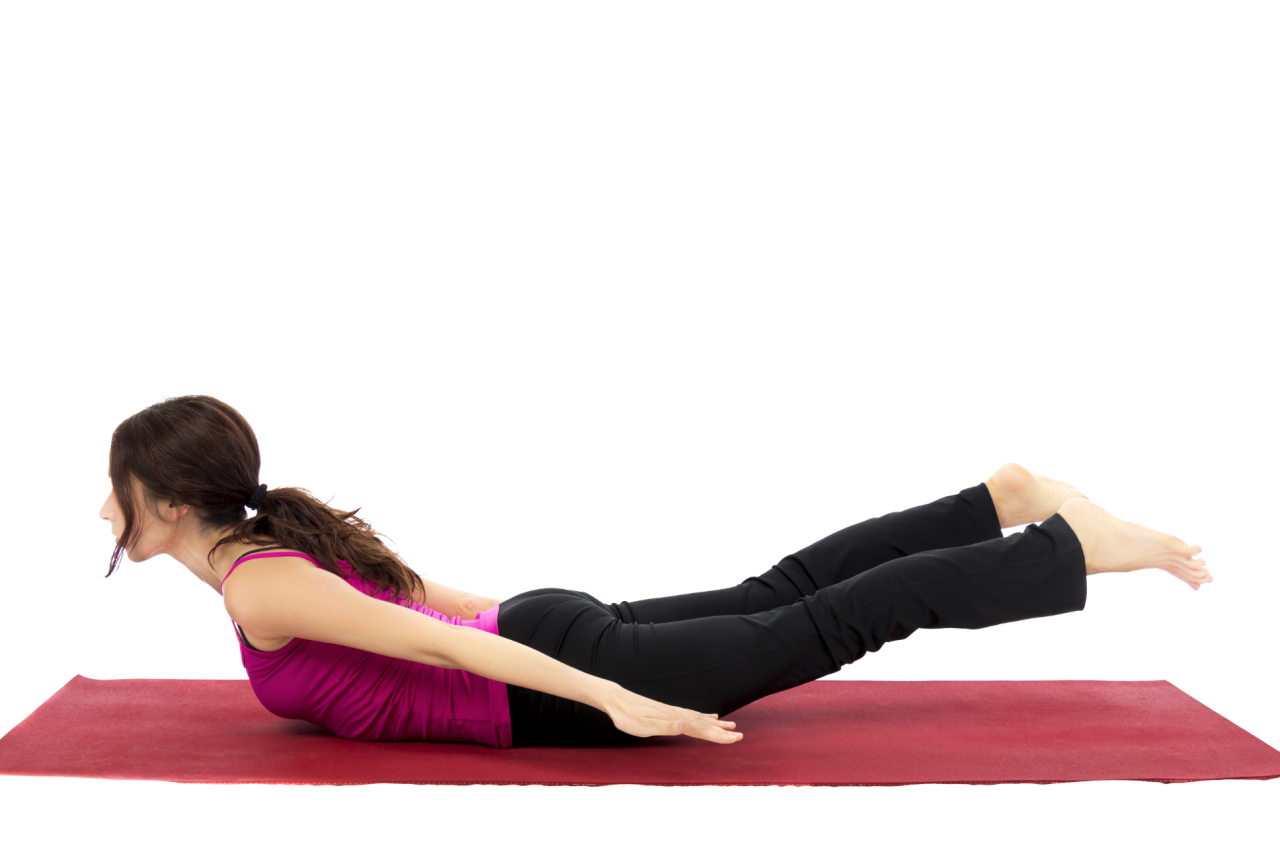
Prioritizing safety is paramount during core workouts. Proper technique, warm-up, and cool-down are crucial for injury prevention and maximizing the benefits of your exercises. Understanding potential risks and knowing when to modify or stop an exercise are essential aspects of a safe and effective core training program.Safe core workouts are not just about avoiding injuries; they’re about performing exercises correctly to achieve optimal results while minimizing the risk of harm.
This involves paying close attention to your body’s signals, knowing your limitations, and recognizing when to seek professional guidance.
Common Core Workout Injuries and Prevention
Common core workout injuries include muscle strains, lower back pain, and herniated discs. These injuries often stem from improper form, insufficient warm-up, or pushing beyond one’s limits. Consistent practice of proper form, coupled with adequate rest and recovery, significantly reduces the risk of these issues.
Importance of Warm-up and Cool-down Routines
A thorough warm-up prepares the muscles for the workout by increasing blood flow and flexibility. This reduces the risk of muscle strains and tears. Similarly, a cool-down period allows the body to gradually return to a resting state, promoting recovery and reducing muscle soreness. A warm-up typically involves dynamic stretching, such as arm circles and leg swings, while a cool-down might include static stretches, holding each stretch for 15-30 seconds.
Exercises to Avoid with Specific Injuries or Conditions
Certain exercises may exacerbate existing injuries or conditions. Individuals with lower back pain, for instance, should avoid exercises that place excessive stress on the lumbar spine, such as certain types of crunches or sit-ups performed with poor form. Consult a healthcare professional or physical therapist to determine which exercises are safe and appropriate for your specific needs.
- Exercises involving spinal flexion with heavy weights or poor form should be avoided by individuals with back pain.
- Individuals with neck injuries should avoid exercises that strain the neck, such as extreme neck rotations or certain types of twists.
- Those with knee problems should avoid exercises that put excessive stress on the knees, such as deep squats or high-impact movements.
Listening to Your Body and Knowing When to Stop
Pay close attention to your body’s signals during a workout. Muscle pain is normal, but sharp, shooting pains, or persistent discomfort are warning signs to stop and rest. Resting allows the body to recover and repair, preventing further injury. If you experience any pain, stop the exercise immediately.
Importance of Proper Form
Maintaining proper form throughout each exercise is crucial for injury prevention. This includes ensuring the correct alignment of your spine, maintaining a neutral spine position, and engaging the core muscles correctly. For instance, in a plank, ensure your body forms a straight line from head to heels, engaging your core to stabilize your posture. Proper form reduces stress on joints and promotes effective muscle engagement.
Core Workouts for Specific Goals

Effective core workouts are not a one-size-fits-all solution. Tailoring exercises to specific goals, such as improving posture, enhancing athletic performance, or boosting overall strength, maximizes results and minimizes the risk of injury. By understanding the unique needs of different individuals, personalized routines can be created to achieve optimal outcomes.Understanding the connection between core strength and various aspects of health and well-being is crucial.
Strong core muscles play a vital role in maintaining good posture, alleviating back pain, enhancing athletic performance, and improving overall body strength and endurance. This section will delve into specialized core workouts designed to address specific goals.
Improving Posture and Back Pain Relief
Strengthening the core muscles, particularly the deep stabilizing muscles, is fundamental to improving posture and alleviating back pain. These muscles provide crucial support for the spine, preventing strain and promoting proper alignment. A balanced core workout targets both the superficial and deep muscles, ensuring comprehensive support for the spine.
- Exercises Emphasizing Spinal Stabilization: Planks, side planks, bird-dog exercises, and variations of these exercises help to strengthen the core muscles responsible for maintaining spinal alignment. Proper form is paramount, focusing on maintaining a neutral spine throughout each repetition. These exercises promote spinal stability and reduce the likelihood of back pain.
- Posture-Correcting Exercises: Incorporating exercises like pelvic tilts, cat-cow stretches, and back extensions can help to improve posture by strengthening the muscles that support the spine and pelvis. These exercises can be performed in a controlled manner, ensuring that the spine maintains a neutral position throughout the movement.
- Targeted Muscle Activation: Exercises such as glute bridges and hip thrusts are crucial for engaging the gluteal muscles, which work in conjunction with the core to stabilize the pelvis and lower back. This synergistic action helps to improve posture and prevent back pain.
Enhancing Athletic Performance and Sports-Specific Needs
For athletes, core strength is crucial for optimal performance and injury prevention. A tailored core workout program can enhance stability, power, and agility, leading to improved athletic results.
- Dynamic Core Exercises: Exercises like Russian twists, medicine ball slams, and mountain climbers increase core strength and power, mirroring the dynamic movements involved in many sports. These movements help build functional strength applicable to athletic activities.
- Sport-Specific Drills: Integrate core exercises relevant to the specific sport, like rotational movements for tennis players, or lateral movements for soccer players. This enhances core stability and power transfer for the sport’s specific demands.
- Plyometric Core Workouts: Plyometric exercises, such as jump squats with core engagement, can help to improve power and explosiveness, which are critical for many sports. Proper form and progressive overload are essential to avoid injury and maximize performance gains.
Improving Core Stability and Reducing the Risk of Injury
Core stability is essential for preventing injuries in various activities. A strong core provides a stable base for movements, reducing stress on joints and muscles.
- Emphasis on Core Engagement: Incorporating exercises that actively engage the core muscles throughout the entire movement, from the start to the finish, is essential for building core stability. This approach ensures that the core muscles are continuously working to support the body.
- Progressive Overload: Gradually increasing the difficulty and intensity of core exercises over time helps to progressively strengthen the core muscles. This strategy prevents injuries and promotes sustained improvements.
- Dynamic Warm-up and Cool-down: Before any core workout, a dynamic warm-up that prepares the muscles for activity is essential. A cool-down period after the workout promotes recovery and reduces the risk of muscle soreness.
Enhancing Overall Body Strength and Endurance
Core strength is a vital component of overall body strength and endurance. A robust core acts as a foundation for movements throughout the body.
- Compound Exercises with Core Engagement: Incorporate compound exercises like squats, deadlifts, and rows, focusing on engaging the core muscles throughout the entire movement. This approach maximizes overall strength development while strengthening the core.
- High-Repetition Exercises: Exercises like crunches and leg raises, performed with high repetitions, can improve core endurance. Consistent engagement of the core muscles enhances their ability to maintain strength and stability over extended periods.
- Circuit Training: A circuit training program combining core exercises with other bodyweight exercises or resistance training can significantly enhance overall strength and endurance. This approach provides a comprehensive and challenging workout.
Targeting Different Parts of the Core
Effective core workouts target various parts of the core for comprehensive strength and stability.
- Anterior Core (Abs): Exercises such as crunches, leg raises, and reverse crunches target the abdominal muscles. These exercises strengthen the muscles responsible for flexion and support the trunk.
- Posterior Core (Lower Back): Exercises such as back extensions, good mornings, and hyperextensions target the muscles of the lower back, promoting spinal extension and stability.
- Lateral Core (Obliques): Exercises like side planks, Russian twists, and side bends strengthen the obliques, which are crucial for rotational movements and stability.
Advanced Core Training Techniques

Advanced core training delves beyond basic exercises, focusing on intricate techniques to enhance core strength, stability, and overall athletic performance. These methods often involve a deeper understanding of core activation, precise movement control, and the integration of advanced tools. This section will explore various advanced techniques and considerations for incorporating them into your training regimen.
Core Activation Exercises
Core activation exercises emphasize the engagement of deep core muscles before performing any other movement. This preparatory phase primes the core for optimal stabilization during subsequent exercises, reducing the risk of injury and maximizing the effectiveness of the workout. Proper activation involves controlled, mindful movements that isolate and strengthen the deep abdominal and spinal muscles. Examples include drawing-in maneuvers (bracing), hollow body holds, and bird-dog exercises.
These techniques improve intra-abdominal pressure, which contributes to core stability.
Isometrics in Core Training
Isometric exercises, characterized by static holds, are valuable for developing core strength and endurance. These exercises involve maintaining a specific position against resistance, rather than moving through a range of motion. By holding a particular posture, the muscles maintain tension for a prolonged duration, resulting in significant strength gains. For instance, holding a plank position for extended periods can effectively strengthen the core muscles, particularly the rectus abdominis, transverse abdominis, and erector spinae.
Isometric exercises are beneficial for individuals seeking to build strength and improve muscular endurance in the core region.
Resistance Band and Weight Plate Integration
Resistance bands and weight plates offer the potential to augment core workouts by providing variable resistance levels. Resistance bands allow for adaptable resistance, escalating as strength improves, making them suitable for various fitness levels. Incorporating weight plates, such as medicine balls, can add an element of dynamic instability, challenging the core muscles to maintain balance and stability during exercises.
However, the use of resistance bands or weight plates necessitates caution to avoid potential injuries. Proper form and controlled movements are crucial to prevent strain or overuse of the core muscles. A gradual increase in resistance and meticulous attention to form should guide the integration of these tools.
Core Workout Tools and Equipment
Various tools and equipment can enhance core training programs. Stability balls, BOSU balls, and resistance bands can be used to introduce dynamic instability, challenging the core muscles to maintain stability during exercises. Medicine balls, weighted vests, and weighted bars provide resistance to enhance the effectiveness of core exercises. The choice of tools will depend on individual fitness levels and goals.
Carefully select equipment appropriate for your fitness level and ensure proper form to prevent injuries.
Tracking and Monitoring Core Workout Progress
Tracking core workout progress is essential to measure improvement and tailor training regimens. Key metrics include the duration of core exercises, the number of repetitions or sets completed, and the amount of resistance used. Maintaining a workout logbook is useful to document progress and identify patterns. Progressive overload is a crucial principle for consistent improvement; gradually increase the intensity or duration of exercises over time.
Using a digital fitness tracking app can also help to record progress and monitor exercise performance.
Effective Core Workout Progressions
Progressive overload is essential for achieving optimal results. Begin with fundamental core exercises and gradually increase the intensity and complexity of workouts. Progression can involve increasing the duration of holds, the number of repetitions, the resistance used, or incorporating more challenging exercises. For example, progressing from a basic plank to a side plank or incorporating stability ball exercises can progressively challenge the core muscles.
Individualized progressions should be tailored to specific fitness levels and goals. Consult a healthcare professional or certified fitness trainer to create a personalized progression plan.
Last Recap
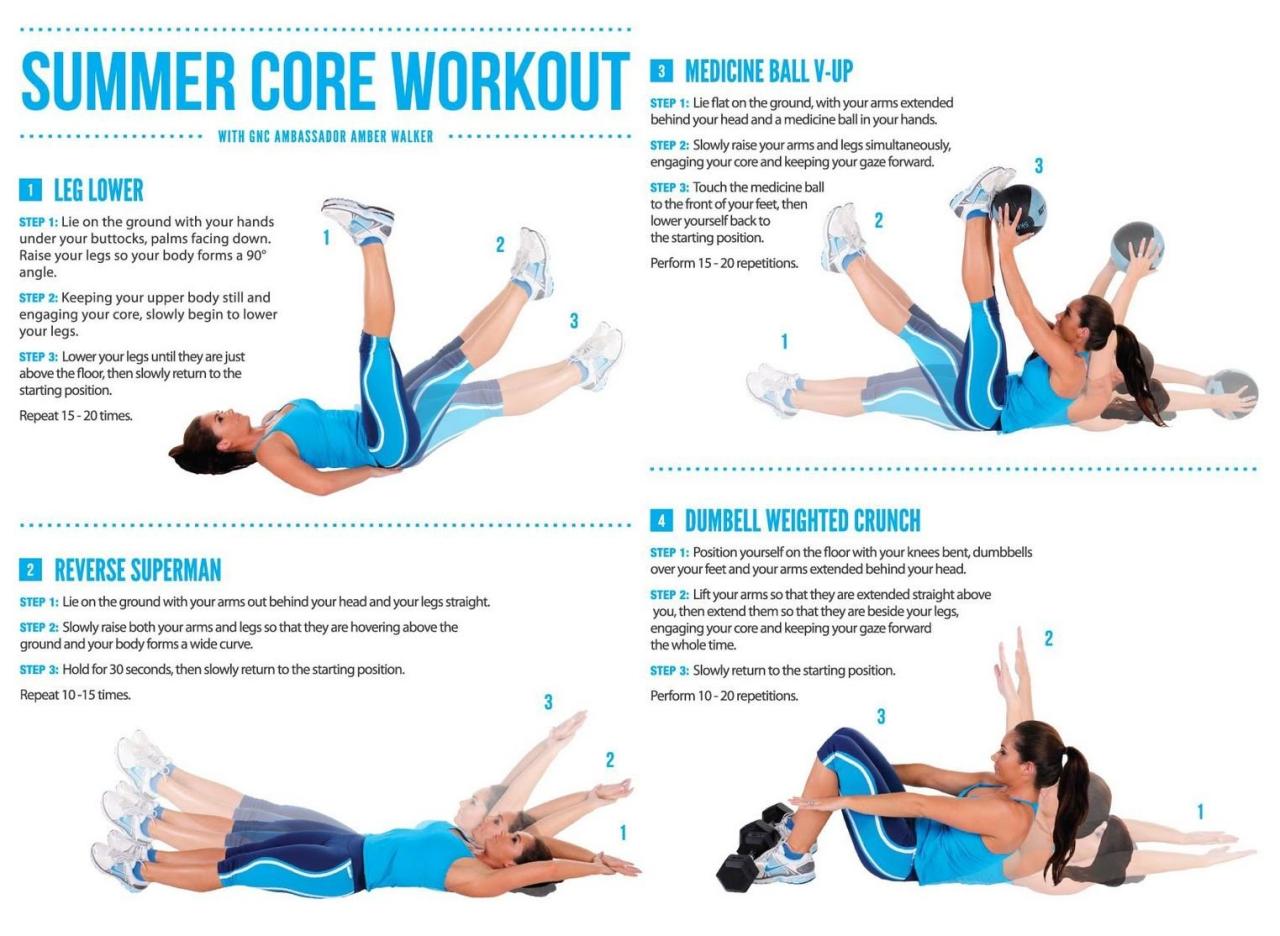
In conclusion, mastering core workouts involves understanding muscle groups, technique, and personalized routines. This guide has presented a structured approach to core training, encompassing everything from introductory exercises to advanced techniques. By following the provided routines, incorporating proper nutrition and recovery strategies, and prioritizing safety, you can effectively build a strong and resilient core, achieving your fitness objectives.