Resistance band exercises offer a fantastic, accessible way to achieve a wide range of fitness goals, from building strength to improving flexibility. This comprehensive guide dives deep into the world of resistance band training, providing a detailed overview of various exercises, safety precautions, and workout progressions. Whether you’re a beginner or an experienced fitness enthusiast, this resource will equip you with the knowledge and tools necessary to maximize your resistance band workouts.
This guide explores the different types of resistance bands, comparing their strengths and suitability for various fitness levels. It also provides a detailed breakdown of exercises for different muscle groups, including specific instructions for proper form and technique. Furthermore, essential safety tips, exercise progressions, and sample workout routines are included to ensure a safe and effective training experience.
Introduction to Resistance Band Exercises

Resistance band exercises offer a versatile and accessible approach to improving physical and mental well-being. They provide a powerful method for strengthening muscles, enhancing flexibility, and improving cardiovascular health, all while requiring minimal space and equipment. This accessibility makes them ideal for individuals of all fitness levels and backgrounds.Resistance band training utilizes the elastic properties of the bands to provide variable resistance during exercises.
This progressive resistance is crucial for stimulating muscle growth and strength gains. The adaptability of resistance bands allows for a wide range of exercises targeting various muscle groups, making them a comprehensive tool for fitness routines.
Types of Resistance Bands
Resistance bands come in various strengths, colors, and materials. The color coding typically corresponds to the band’s resistance level, with darker colors signifying greater resistance. This allows for progressive overload, gradually increasing the challenge as fitness improves. Different materials, such as latex or synthetic rubber, may influence the band’s durability and feel. Choosing the appropriate band strength is critical for safety and effectiveness, ensuring the user can maintain proper form while working at a challenging intensity.
Benefits of Resistance Band Exercises
Resistance band exercises offer a multitude of advantages compared to other forms of exercise equipment. They are significantly more affordable and space-saving than free weights or gym memberships. Their portability makes them ideal for home workouts or travel, allowing for exercise regardless of location. The lower risk of injury, when proper form is maintained, is another significant benefit.
Resistance Bands vs. Free Weights
| Feature | Resistance Bands | Free Weights |
|---|---|---|
| Equipment Cost | Low | High |
| Space Requirements | Minimal | Moderate |
| Risk of Injury (with proper form) | Lower | Higher |
| Portability | High | Low |
| Exercises Possible | Wide variety | Wide variety |
The table above highlights the key distinctions between resistance band and free weight exercises. The lower cost and portability of resistance bands make them a practical choice for individuals seeking a versatile fitness solution. While free weights offer a significant advantage in terms of resistance, resistance bands provide an effective alternative with a lower barrier to entry. Proper form is essential in both methods to maximize benefits and minimize injury risk.
Different Types of Resistance Band Exercises
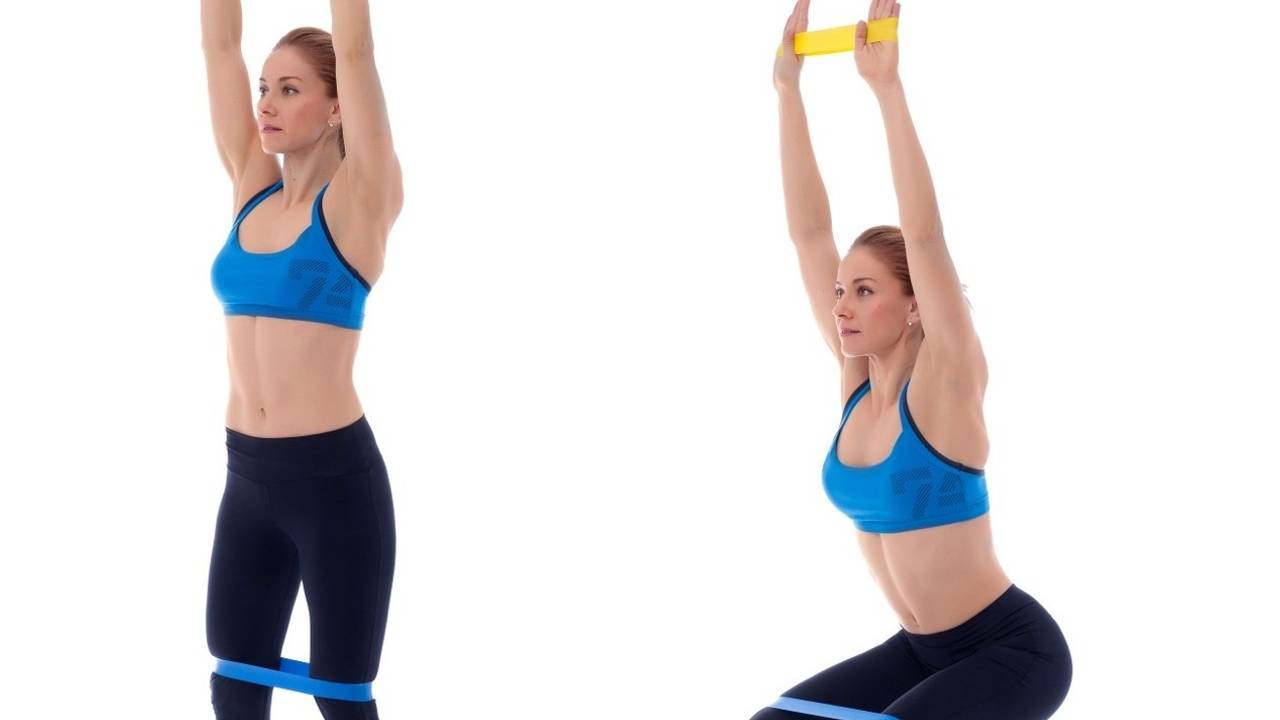
Resistance bands offer a versatile and convenient way to build strength and improve fitness. They provide adjustable resistance, allowing for progressive overload and tailoring workouts to individual needs. This section details common resistance band exercises for upper and lower body, emphasizing proper form and technique for optimal results.
Upper Body Resistance Band Exercises
Resistance bands effectively target various upper body muscles. These exercises enhance strength, endurance, and flexibility. Consistent practice builds muscle tone and improves overall physique.
- Bicep Curls: Stand with feet shoulder-width apart, holding the resistance band with an overhand grip, hands slightly wider than shoulder-width apart. Keeping your elbows close to your sides, curl the band towards your shoulders, squeezing your biceps at the top of the movement. Slowly lower the band back to the starting position. Proper form involves maintaining a neutral spine and avoiding swinging or using momentum.
- Triceps Extensions: Anchor the band around a sturdy object at shoulder height. Hold the band with an overhand grip, arms extended, and the band positioned behind your head. Keeping your elbows close to your head, extend your arms straight down, contracting your triceps. Slowly return to the starting position.
- Chest Press: Anchor the band around a sturdy object at chest height. Hold the band with an overhand grip, hands slightly wider than shoulder-width apart. Keeping your elbows slightly bent, press the band away from your chest, extending your arms until your arms are fully extended. Slowly return to the starting position. Proper form involves keeping your core engaged and avoiding arching your back.
- Rows: Anchor the band around a sturdy object at waist height or slightly below. Hold the band with an overhand grip, slightly wider than shoulder-width apart, and step away from the anchor point. Keeping your back straight and core engaged, pull the band towards your torso, squeezing your back muscles. Slowly return to the starting position.
- Shoulder Press: Anchor the band around a sturdy object at shoulder height. Hold the band with an overhand grip, hands slightly wider than shoulder-width apart, and step away from the anchor point. Keeping your back straight and core engaged, press the band directly above your head, squeezing your shoulder muscles. Slowly return to the starting position. Keep your elbows slightly bent throughout the movement.
Lower Body Resistance Band Exercises
Resistance bands are valuable for strengthening and toning lower body muscles. These exercises improve balance, stability, and lower body power.
- Lunges: Loop the band around your ankles. Stand with feet hip-width apart. Step forward with one leg, bending both knees to 90 degrees. Ensure your front knee stays aligned with your ankle, and your back knee almost touches the ground. Push off with your front foot to return to the starting position.
Proper form involves maintaining an upright posture and avoiding leaning forward or collapsing the knee.
- Squats: Loop the band around your ankles. Stand with feet shoulder-width apart. Keeping your back straight and core engaged, lower your hips as if sitting in a chair, bending your knees. Ensure your knees track over your ankles. Push through your heels to return to the starting position.
- Glute Bridges: Lie on your back with knees bent and feet flat on the floor. Loop the band around your ankles. Keeping your core engaged, lift your hips off the ground until your body forms a straight line from your shoulders to your knees. Squeeze your glutes at the top of the movement and slowly lower your hips back down.
- Hip Abduction: Loop the band around your knees. Sit on the floor or stand with feet hip-width apart. Keeping your core engaged, move your knees out to the sides, resisting the band. Slowly return to the starting position.
- Calf Raises: Loop the band around your ankles. Stand with feet shoulder-width apart. Keeping your core engaged, raise up onto your toes, squeezing your calf muscles. Slowly lower your heels back down to the starting position.
Resistance Band Exercise Chart
| Muscle Group | Exercise | Description |
|---|---|---|
| Biceps | Bicep Curls | Curl the band towards your shoulders, squeezing biceps. |
| Triceps | Triceps Extensions | Extend arms straight down, contracting triceps. |
| Chest | Chest Press | Press the band away from your chest, extending arms. |
| Back | Rows | Pull the band towards your torso, squeezing back muscles. |
| Legs | Lunges | Step forward with one leg, bending both knees to 90 degrees. |
| Legs | Squats | Lower hips as if sitting in a chair, bending knees. |
| Glutes | Glute Bridges | Lift hips off the ground, squeezing glutes at the top. |
| Hips | Hip Abduction | Move knees out to the sides, resisting the band. |
| Calves | Calf Raises | Raise up onto your toes, squeezing calf muscles. |
Safety and Precautions
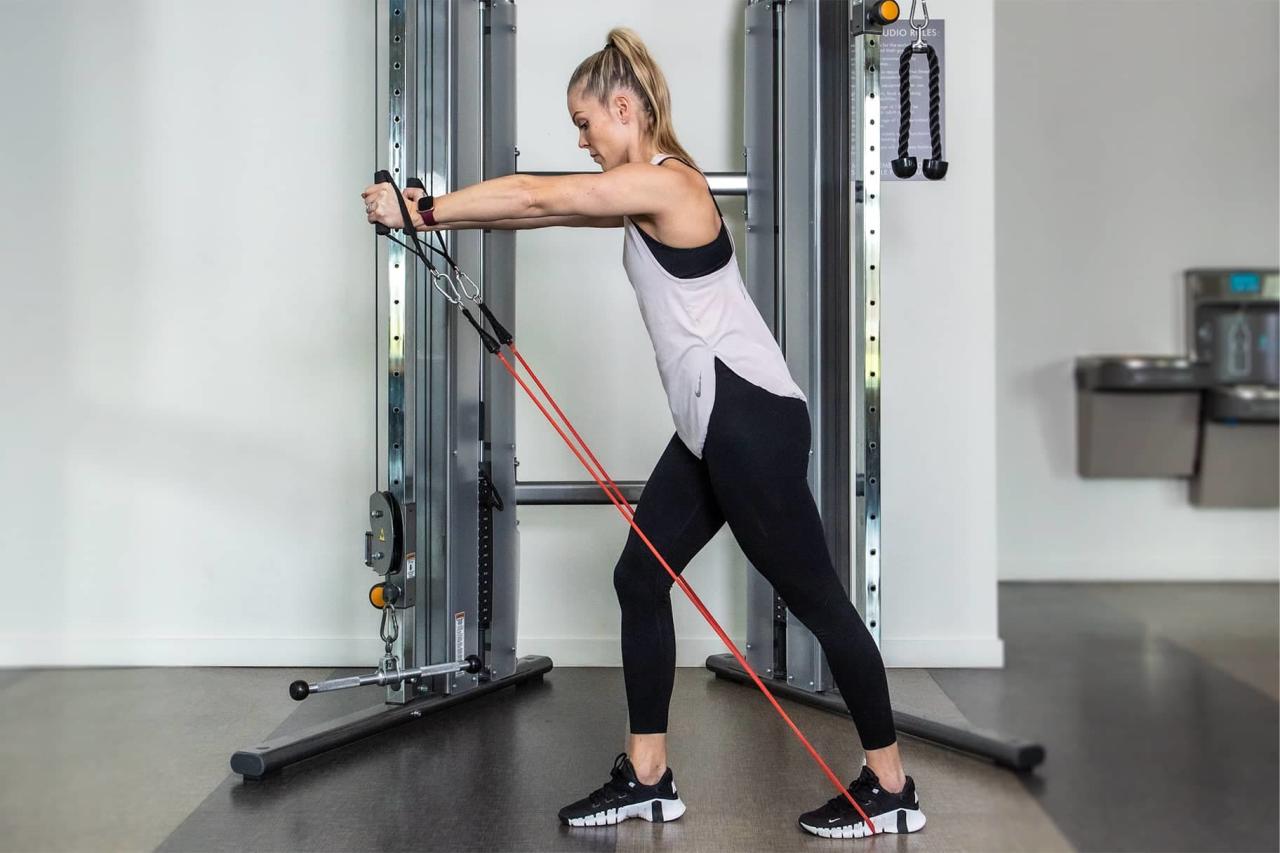
Resistance band exercises offer a convenient and effective way to improve strength and fitness. However, proper safety precautions are crucial to prevent injuries and ensure a positive workout experience. Understanding the importance of warm-up and cool-down routines, recognizing potential mistakes, and selecting the correct resistance band are vital for safe and effective training.
Importance of Warm-up and Cool-down Routines
Adequate warm-up and cool-down routines are essential for preparing the body for exercise and promoting recovery. A proper warm-up gradually increases blood flow to the muscles, improving flexibility and reducing the risk of strains and tears. A cool-down allows the body to transition back to a resting state, reducing muscle soreness and promoting recovery. Both warm-up and cool-down routines are critical components of a comprehensive resistance band workout.
Common Mistakes to Avoid
Several common mistakes can increase the risk of injury during resistance band exercises. Improper form, using excessive resistance, and neglecting proper breathing techniques can lead to strains, tears, or other musculoskeletal issues. Maintaining good posture, using controlled movements, and focusing on proper breathing patterns are essential for injury prevention.
Selecting the Appropriate Resistance Band
Choosing the correct resistance band for your fitness level is vital for maximizing benefits and minimizing risks. Beginners should start with lighter resistance bands and gradually progress to heavier bands as strength improves. Overusing a band too heavy for your capabilities can lead to injuries and hinder progress. Consult a fitness professional for guidance in selecting the appropriate resistance band for your needs.
Performing a Thorough Warm-up
A thorough warm-up prepares the muscles for exercise, reducing the risk of injury. Dynamic stretching, which involves controlled movements, is highly effective. Examples include arm circles, leg swings, torso twists, and torso rotations. These movements improve blood flow and increase muscle temperature, making them more pliable and less prone to injury. Static stretches, which hold a position, should be performed after the dynamic stretches.
Preventing Injuries During Resistance Band Exercises
Proper form, gradual progression, and mindful listening to your body are key to injury prevention. Always maintain good posture, use controlled movements, and avoid jerky or uncontrolled motions. Pay attention to any pain or discomfort, and stop exercising immediately if you experience sharp or persistent pain. Gradually increase the intensity and duration of your workouts to allow your body to adapt to the new stress.
Avoid overexertion and ensure proper rest and recovery.
Common Resistance Band Exercise Injuries and Treatment
Common resistance band injuries include muscle strains, tendinitis, and wrist or hand pain. Muscle strains often occur due to improper form or sudden, forceful movements. Tendinitis is inflammation of the tendons, typically from overuse or incorrect form. Wrist or hand pain can result from gripping the band incorrectly or exerting too much force. Treatment for these injuries often involves rest, ice, compression, and elevation (RICE).
Seek professional medical advice for more severe or persistent injuries.
Exercise Progressions and Variations

Resistance bands offer a versatile and adaptable tool for progressive overload, allowing you to progressively challenge your muscles and enhance fitness. This section will detail strategies for increasing intensity and resistance, modifications for different fitness levels, and sample workout routines for beginners and advanced users.Understanding progressive overload is key to achieving optimal results with resistance band exercises. This involves gradually increasing the demands placed on your muscles over time, whether by increasing resistance, the number of repetitions, or the sets.
Proper progressions help avoid plateaus and maximize muscle growth and strength.
Progressive Overload Strategies
Progressive overload with resistance bands involves incrementally increasing the intensity of your workouts. This can be achieved in several ways:
- Increasing Resistance: Switching to a thicker resistance band is a straightforward method for increasing resistance. For example, transitioning from a light yellow band to a medium blue band will significantly increase the workload on the target muscles.
- Increasing Repetitions and Sets: Gradually increasing the number of repetitions and sets performed for each exercise will challenge your muscles more. Start with 2 sets of 10 repetitions and progress to 3 sets of 15 repetitions as your strength improves.
- Altering Exercise Tempo: Slower eccentrics (lowering the weight) or isometrics (holding the position) can significantly increase the time under tension, stimulating more muscle fibers.
- Increasing Exercise Difficulty: More challenging variations of the same exercise can also increase the resistance. For instance, moving from a basic bicep curl to a band-assisted hammer curl, or adding a twist to your rows, will enhance the resistance and challenge the muscles in new ways.
Modifications for Different Fitness Levels
Resistance bands are highly adaptable to various fitness levels and physical limitations.
- Beginners: For beginners, start with lighter resistance bands and fewer repetitions. Focus on proper form and controlled movements. Begin with 2 sets of 10-12 repetitions for each exercise. If needed, reduce the number of sets or repetitions to avoid injury.
- Intermediate: Intermediate users can use medium resistance bands and increase the number of sets and repetitions. They can also incorporate more challenging variations of exercises, such as unilateral exercises (performing the exercise on one side of the body). Increase the sets to 3 and aim for 12-15 repetitions.
- Advanced: Advanced users can use heavier resistance bands and increase the intensity further by increasing sets, repetitions, and incorporating more complex variations or unilateral exercises. Advanced users can perform 3-4 sets of 15-20 repetitions.
Sample Workout Routine for Beginners
This routine is designed for individuals new to resistance band exercises. Aim for 2-3 sessions per week, allowing for rest days in between.
| Day | Exercises | Sets | Repetitions |
|---|---|---|---|
| Monday | Band Bicep Curls, Band Rows, Band Chest Press | 2 | 10-12 |
| Wednesday | Band Shoulder Press, Band Triceps Extensions, Band Glute Bridges | 2 | 10-12 |
| Friday | Band Leg Curls, Band Calf Raises, Band Hip Abductors | 2 | 10-12 |
Advanced Variations and Progressions
Advanced variations of resistance band exercises target specific muscle groups with greater intensity and resistance.
- Advanced Bicep Curls: Incorporating a supination (palms facing up) and pronation (palms facing down) motion, or adding an alternating motion can challenge the biceps from different angles.
- Advanced Rows: Utilizing different grip widths (narrower or wider) and incorporating unilateral rows (one arm at a time) can target different muscle fibers in the back.
30-Day Resistance Band Workout Plan
This plan provides a structured approach to resistance band training for a month. Adjust the intensity and exercises based on your fitness level and progress.
- Day 1: Biceps, back (rows), chest
- Day 2: Shoulders, triceps, glutes
- Day 3: Legs (hamstrings, calves, hip abductors), core
- Day 4: Rest or active recovery
- Day 5: Repeat Day 1
- Day 6: Repeat Day 2
- Day 7: Repeat Day 3
Equipment and Accessories
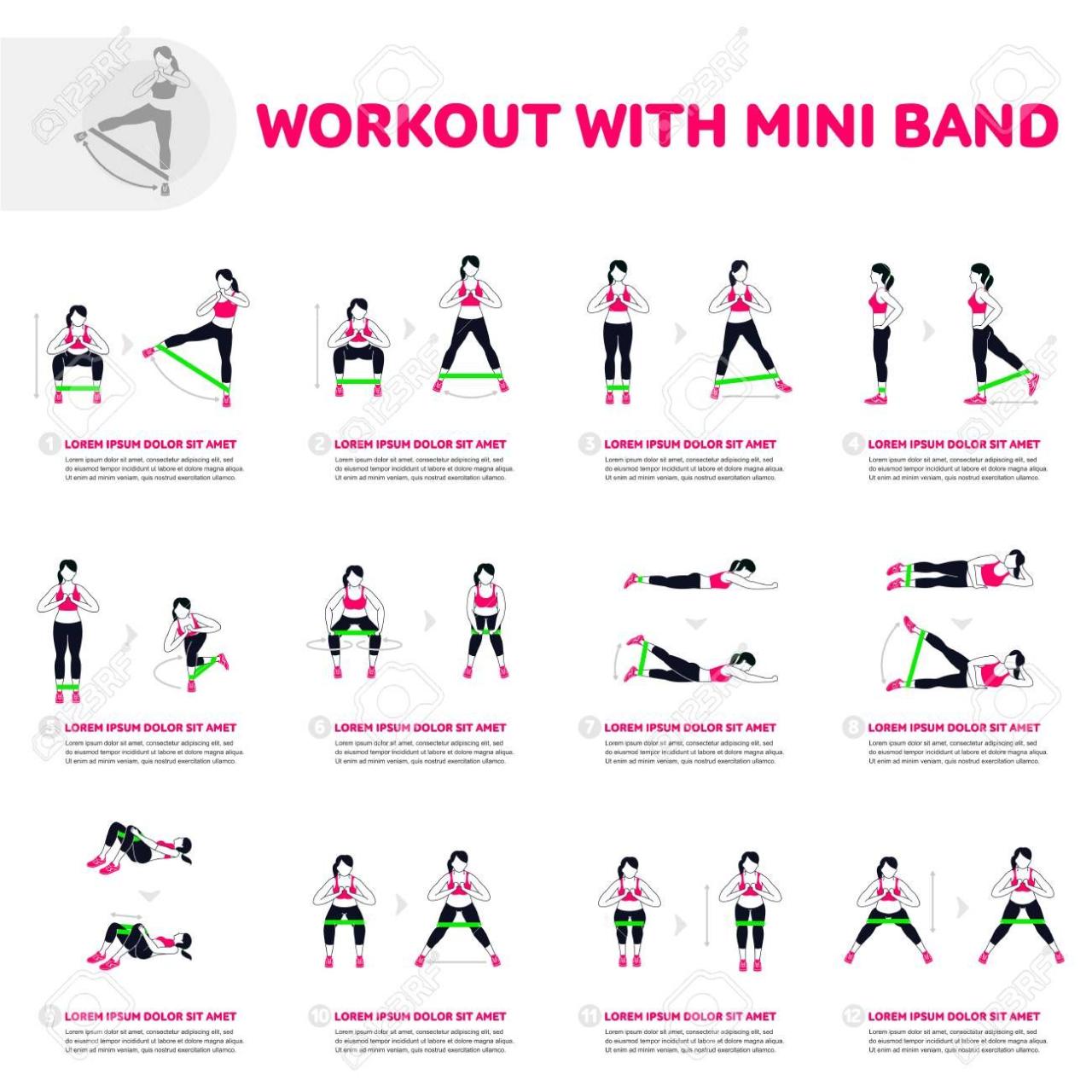
Resistance bands are versatile tools that can enhance your fitness routine significantly. Proper selection and care of your bands are crucial for maximizing their effectiveness and prolonging their lifespan. Understanding the different types of bands, choosing the right resistance level, and knowing how to store and maintain them are key elements in a successful resistance band workout program.
Resistance Band Types
Resistance bands come in various materials and features, each designed for different purposes and fitness levels. This variety allows users to select bands that best suit their individual needs.
- Latex Bands: These are the most common type, offering a good balance of affordability and durability. They are often chosen for their responsiveness and range of motion, allowing for controlled movements. Latex bands typically have a moderate level of resistance, making them suitable for a wide range of exercises.
- Fabric-Covered Bands: These bands offer a superior grip compared to latex bands, minimizing slippage and maximizing user comfort during workouts. The fabric covering can also provide additional cushioning, making them a comfortable option for those with sensitive skin. Fabric-covered bands are typically available in varying resistance levels.
- Suspension Bands: These bands, often used for suspension training, typically feature a loop or handle at one end for attachment to a fixed point. Suspension bands are designed to target multiple muscle groups simultaneously, often promoting core engagement and stability. The varying resistance levels enable targeted training for different fitness levels.
- Tubular Bands: These bands feature a tube-like construction. They often offer a smooth and continuous resistance, making them suitable for a range of exercises that require consistent tension. The bands are frequently used in strength training, especially for exercises that demand prolonged exertion.
Selecting the Right Resistance Band
The appropriate resistance band is directly related to your fitness level and the specific exercises you plan to perform. A band that is too light will not provide sufficient resistance, while a band that is too heavy may cause injury.
- Beginners should start with light resistance bands to ease into the exercises and avoid strain. This allows for controlled movements and builds a foundation for progressively challenging workouts.
- Intermediate users should opt for medium-resistance bands, which offer a suitable challenge for exercises. This resistance level enables progressive overload and allows for a more challenging workout without significant risk of injury.
- Advanced users can choose heavy-resistance bands for maximum challenge and to further progress their fitness levels. Heavy resistance bands enable advanced users to perform exercises with greater intensity, increasing strength and endurance.
Storing and Maintaining Resistance Bands
Proper storage and maintenance significantly extend the life of your resistance bands.
- Store resistance bands in a cool, dry place, away from direct sunlight and extreme temperatures. Heat and cold can affect the elasticity and durability of the bands.
- Avoid stretching the bands excessively, as this can damage their structure and reduce their effectiveness over time.
- Clean the bands with a damp cloth after each use to remove sweat and dirt. This prevents the growth of bacteria and maintains hygiene.
Resistance Band Accessories
Various accessories can enhance your resistance band workouts.
- Handles: Handles can improve grip and allow for a wider range of exercises, particularly for those with hand or wrist limitations.
- Door Anchors: Door anchors provide a stable attachment point for resistance band exercises, enabling more challenging workouts and better control.
- Foot Straps: Foot straps are helpful for isolating leg muscles and performing exercises that require a firm hold, like leg curls and extensions.
Resistance Band Suitability Table
This table provides a quick reference for selecting the appropriate resistance band for different exercises and fitness levels.
| Band Type | Strength | Best for |
|---|---|---|
| Light | Low | Beginners |
| Medium | Medium | Intermediate |
| Heavy | High | Advanced |
Resistance Band Exercises for Specific Goals
Resistance bands offer a versatile and convenient way to achieve a wide range of fitness goals. Their portability, affordability, and adaptability make them ideal for home workouts, rehabilitation, and supplementing gym routines. This section delves into how resistance bands can be tailored to specific fitness objectives, from weight loss and muscle building to core strengthening and posture improvement.Proper use of resistance bands, combined with a well-structured routine, can significantly enhance strength, endurance, and flexibility.
This section provides examples of effective routines for achieving various fitness goals.
Weight Loss Workout Routine
Resistance band exercises are highly effective for weight loss due to their ability to increase calorie expenditure and build muscle. Muscle tissue burns more calories at rest than fat tissue. A routine focusing on compound movements, which engage multiple muscle groups simultaneously, will maximize calorie burn.
- Warm-up (5 minutes): Dynamic stretches like arm circles, leg swings, and torso twists prepare the body for exercise. This reduces the risk of injury and improves blood flow to the muscles.
- Workout (20-30 minutes): Perform 3 sets of 10-12 repetitions for each exercise. Choose a resistance band that provides a challenging but manageable resistance.
- Band Squats: Stand with feet shoulder-width apart, band around your thighs. Lower your hips as if sitting in a chair, maintaining a straight back. Repeat.
- Band Rows: Anchor the band to a stable object. Hold the band handles with an overhand grip, keeping your back straight. Pull the band towards your chest, squeezing your shoulder blades together. Repeat.
- Band Lunges: Stand on the band with one foot, holding the other end. Step forward with one leg, bending both knees to 90 degrees. Return to the starting position and repeat with the other leg.
- Band Push-ups: Place the band around your upper back. Perform standard push-ups, maintaining a straight line from head to heels. Repeat.
- Cool-down (5 minutes): Static stretches, holding each stretch for 20-30 seconds, help improve flexibility and reduce muscle soreness. Examples include hamstring stretches and quad stretches.
Muscle Building Workout Routine
Resistance bands provide progressive resistance, allowing for gradual increases in intensity as muscle strength improves. This is crucial for stimulating muscle growth.
- Warm-up (5 minutes): Similar dynamic stretches as for weight loss routine.
- Workout (25-35 minutes): Perform 3 sets of 8-12 repetitions for each exercise. Increase band resistance as you get stronger.
- Band Bicep Curls: Hold the band handles with an overhand grip. Curl the band towards your shoulders, keeping your elbows close to your sides. Repeat.
- Band Triceps Extensions: Anchor the band to a stable object. Hold the band handles with an overhand grip behind your head. Extend your arms until the band is straight, squeezing your triceps. Repeat.
- Band Lateral Raises: Stand with feet shoulder-width apart, holding the band handles. Raise your arms to shoulder height, maintaining a slight bend in your elbows. Repeat.
- Band Overhead Press: Anchor the band to a stable object. Hold the band handles with an overhand grip above your head. Press the band upwards, maintaining a straight back. Repeat.
- Cool-down (5 minutes): Static stretches focusing on the worked muscles.
Core Strength and Stability Routine
Resistance bands provide an excellent tool for engaging the core muscles and improving stability.
- Warm-up (5 minutes): Gentle core rotations and torso twists to prepare the abdominal muscles.
- Workout (20-25 minutes): Perform 3 sets of 15-20 repetitions for each exercise.
- Band Crunches: Lie on your back with knees bent and feet flat on the floor. Place the band around your feet and hold the handles. Lift your upper body off the floor, contracting your abdominal muscles. Repeat.
- Band Russian Twists: Sit on the floor with knees bent and feet flat on the floor. Hold the band handles and twist your torso from side to side, keeping your back straight. Repeat.
- Band Side Plank: Lie on your side with one forearm on the floor and the other hand holding the band. Lift your hips off the floor, maintaining a straight line from head to heels. Repeat on the other side.
- Cool-down (5 minutes): Gentle stretches focusing on the abdominal muscles.
Posture and Back Pain Relief Exercises
Resistance band exercises can strengthen the muscles that support the spine, improving posture and alleviating back pain.
- Warm-up (5 minutes): Gentle spinal stretches and neck rotations.
- Workout (15-20 minutes): Perform 3 sets of 10-15 repetitions for each exercise.
- Band Pull-Aparts: Hold the band handles with an overhand grip, arms extended in front of you. Pull the band apart, squeezing your shoulder blades together. Repeat.
- Band Back Extensions: Lie face down with the band around your ankles. Lift your upper body off the floor, keeping your core engaged. Repeat.
- Band Shoulder Blade Squeezes: Stand with feet shoulder-width apart and hold the band handles. Squeeze your shoulder blades together, holding for a few seconds. Repeat.
- Cool-down (5 minutes): Gentle spinal stretches and back massages.
Outcome Summary
In conclusion, resistance band training is a powerful and versatile tool for achieving a multitude of fitness objectives. This guide has provided a thorough understanding of how to effectively utilize resistance bands, from selecting the appropriate equipment to progressing exercises for optimal results. By following the safety guidelines and workout plans Artikeld, you can embark on a successful fitness journey using resistance bands.