Stability balls, more than just exercise tools, offer a dynamic approach to fitness. This comprehensive guide dives into the practical applications of stability balls, from fundamental exercises to advanced techniques, providing a thorough understanding of how to use them effectively and safely.
This guide covers various aspects, including different types of stability balls, their benefits and potential risks, a historical overview, and detailed explanations of core strengthening, bodyweight, upper body, and lower body exercises. It also addresses specific needs, safety precautions, and advanced techniques.
Introduction to Stability Balls
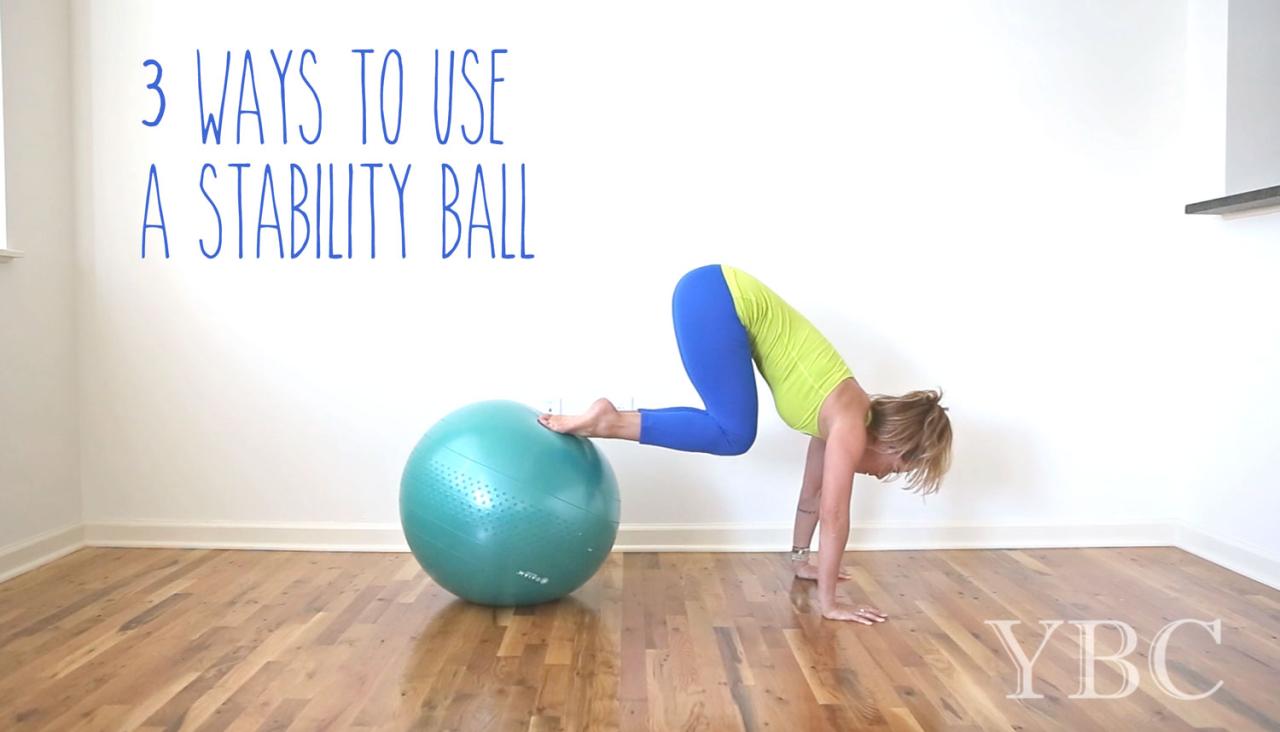
A stability ball, also known as an exercise ball, is an inflatable sphere designed for various physical activities and exercises. It provides an unstable surface, challenging the user’s core strength and balance. Its versatility makes it a valuable tool for improving overall fitness, promoting core engagement, and enhancing body awareness.Stability balls come in a range of sizes, materials, and colors to suit individual needs and preferences.
The size is typically determined by the user’s height and intended use. Different materials offer varying levels of durability, comfort, and responsiveness. The appropriate choice depends on the individual’s fitness goals and workout preferences.
Types of Stability Balls
Stability balls are available in different sizes, generally categorized by diameter. Common sizes range from 55 cm to 85 cm, though specialized sizes may exist for specific applications. Smaller balls are often preferred for exercises focusing on core strength, while larger balls are beneficial for stretching and yoga. The appropriate size is crucial for optimal results and user safety.
Stability Ball Materials
The material of a stability ball influences its durability, feel, and cost. Common materials include vinyl, PVC, and high-density plastic. Each material presents unique characteristics.
| Material | Pros | Cons |
|---|---|---|
| Vinyl | Generally affordable, comfortable, and readily available. | May not be as durable as other materials, susceptible to punctures. |
| PVC | Durable and resistant to punctures, good for heavier users and high-impact exercises. | Can be less comfortable than vinyl, may have a slightly firmer feel. |
| High-Density Plastic | Highly durable, resistant to punctures and dents, good for commercial use. | Often more expensive than vinyl or PVC, may have a harder feel. |
Benefits of Using Stability Balls
Incorporating stability balls into a fitness routine offers a variety of advantages. They promote core engagement, improving posture and balance. They provide a unique challenge, leading to enhanced strength and flexibility. Furthermore, the dynamic nature of stability ball exercises can improve cardiovascular health.
Potential Risks Associated with Using Stability Balls
While generally safe, using stability balls inappropriately can pose certain risks. Inadequate supervision or improper technique can lead to injuries, particularly in the back or joints. Users with pre-existing medical conditions should consult with a healthcare professional before using stability balls.
History of Stability Balls
The concept of using unstable surfaces for exercise dates back to ancient times, with examples found in various cultures. The modern stability ball, however, gained popularity in the 1970s, when it was introduced into the fitness world. It became increasingly popular in the 1990s as a tool for rehabilitation and general fitness.
Core Strengthening Exercises
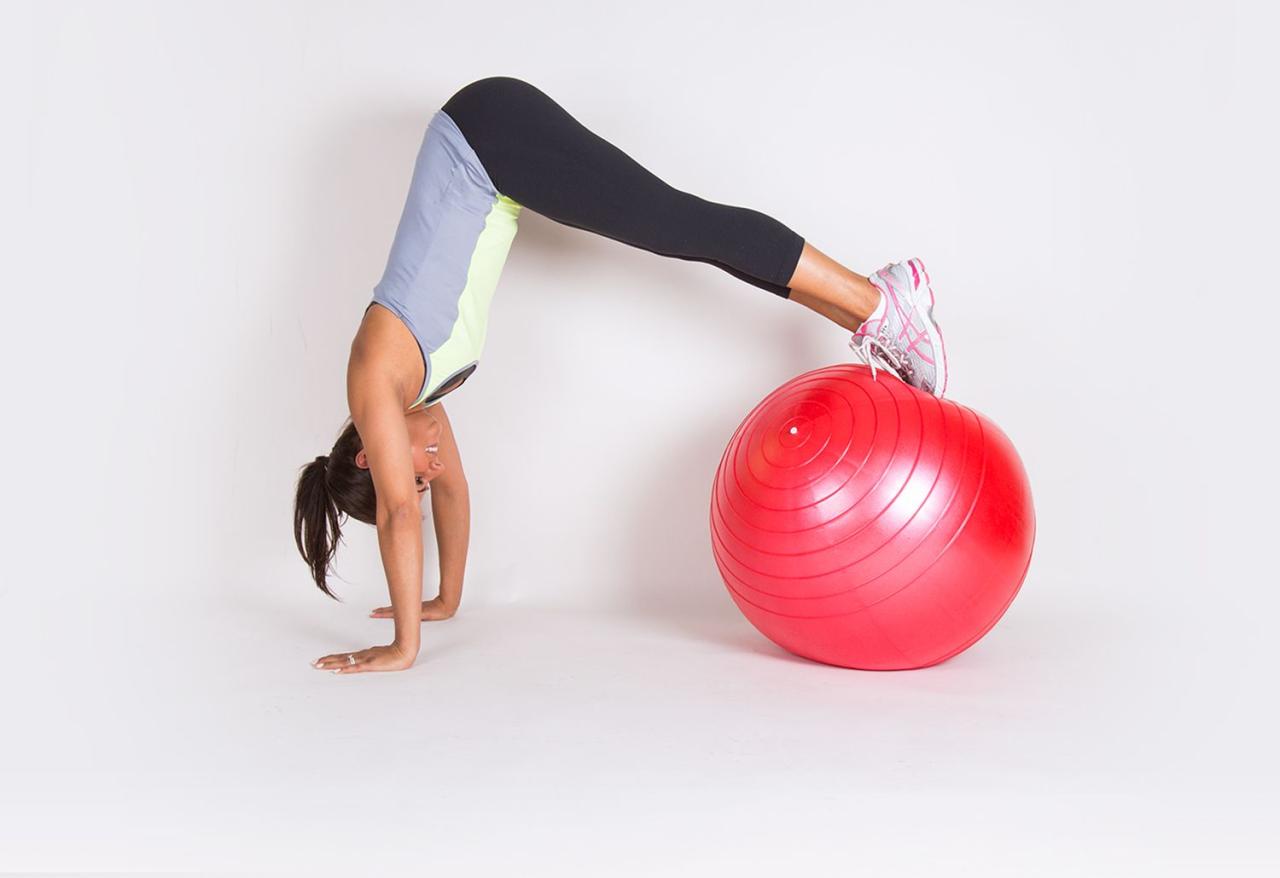
Strengthening your core is crucial for overall physical health and stability. A strong core not only supports your spine but also improves posture, balance, and athletic performance. Stability balls offer a unique and effective way to engage your core muscles in a dynamic manner, promoting greater muscle activation and control.The following exercises are designed to target different areas of your core, emphasizing proper form and technique.
Remember to listen to your body and adjust the difficulty as needed. Consistency is key to achieving results.
Basic Stability Ball Core Strengthening Exercises
These exercises are suitable for beginners and can be modified to increase difficulty. Proper form is paramount to avoid injury and maximize core engagement. Maintain a controlled and deliberate movement pattern.
- Stability Ball Crunch: Lie on your back with your knees bent and feet flat on the floor. Place your feet on the stability ball. Keeping your back flat on the floor, engage your core and lift your shoulders off the floor. Slowly lower your shoulders back down. This exercise targets the rectus abdominis (the “six-pack” muscles).
Adjust the difficulty by increasing the range of motion, or by adding weight (e.g., a light medicine ball). For a more challenging variation, lift one leg off the floor during the crunch. Alternatively, to decrease the difficulty, you can perform the exercise with your knees bent at a 45-degree angle.
- Stability Ball Reverse Crunch: Lie on your back with your knees bent and feet on the stability ball. Engage your core and lift your hips off the floor, bringing your knees towards your chest. Slowly lower your hips back down to the starting position. This exercise targets the lower abdominal muscles and hip flexors. To increase the difficulty, perform the exercise with one leg extended, or lift both legs straight up.
To reduce the difficulty, place your feet on a slightly lower surface or bend your knees slightly more.
- Stability Ball Plank: Start in a plank position, with your forearms resting on the stability ball and your body in a straight line from head to heels. Engage your core to maintain a stable posture. Hold this position for as long as you can. This exercise targets the entire core, including the transverse abdominis, obliques, and back muscles. To increase the difficulty, elevate one leg or arm.
To reduce the difficulty, lower the knees to the floor. Ensure your hips are aligned with your shoulders to avoid back pain.
Adjusting Exercise Difficulty
There are several ways to adjust the difficulty of these exercises, catering to various fitness levels. These adjustments will help you progress safely and effectively.
- Range of Motion: Reduce the range of motion to lessen the intensity of the exercise.
- Foot Placement: Adjust the position of your feet on the stability ball to modify the challenge. Placing your feet closer together on the ball increases the challenge.
- Resistance: Adding weights or resistance bands can increase the intensity.
- Repetition/Sets: Increasing the number of repetitions or sets can also increase the intensity.
- Progression: Gradually increase the duration or number of repetitions as your core strength improves.
Core Exercise Targeting
The table below highlights the target muscles for five core exercises. Understanding these targets can help you tailor your training to achieve specific results.
| Exercise | Target Muscles | Adjustments |
|---|---|---|
| Stability Ball Crunch | Rectus Abdominis | Adjust range of motion, add weight, elevate leg |
| Stability Ball Reverse Crunch | Lower Abdominal Muscles, Hip Flexors | Adjust foot placement, extend leg, bend knees |
| Stability Ball Plank | Transverse Abdominis, Obliques, Back Muscles | Elevate leg/arm, lower knees |
| Stability Ball Leg Raises | Hip Flexors, Quadriceps | Adjust foot placement, add weight, extend leg |
| Stability Ball Russian Twists | Obliques, Abdominal Muscles | Adjust foot placement, add weight |
Avoiding Common Mistakes
Proper form is essential for maximizing effectiveness and preventing injury. These tips will help you avoid common errors in core exercises.
- Maintaining a Neutral Spine: Avoid arching or rounding your back throughout the exercise. Maintain a straight line from your head to your heels.
- Engaging Core Muscles: Focus on engaging your core muscles throughout the entire movement. This will prevent strain on your back and maximize activation.
- Breathing Techniques: Breathe smoothly and steadily throughout the exercise. Avoid holding your breath.
- Controlled Movements: Perform each movement slowly and with control. This helps to minimize strain and maximize muscle engagement.
- Listen to Your Body: Pay attention to any pain or discomfort. Modify or stop the exercise if you experience pain.
Bodyweight Exercises
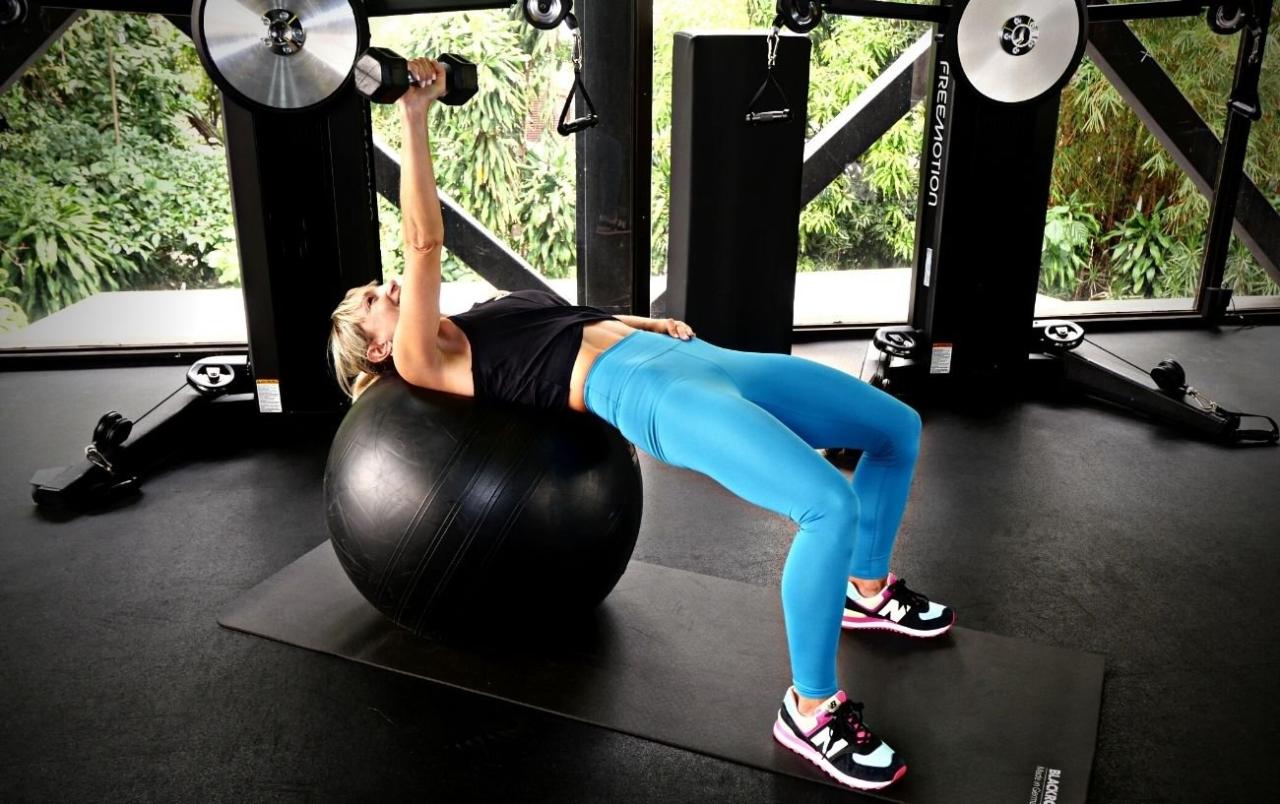
Integrating bodyweight exercises on a stability ball offers a unique challenge that enhances core engagement and improves overall body awareness. This approach leverages the instability of the ball to demand greater muscular control and stability, promoting a more functional and effective workout. The exercises presented below can be adjusted to suit various fitness levels and goals.
Three Effective Bodyweight Exercises
These exercises are designed to target multiple muscle groups, emphasizing core strength and stability while minimizing the risk of injury. By working against the ball’s inherent instability, you’ll develop greater control and coordination.
- Plank on Stability Ball: This exercise effectively targets the core muscles, including the rectus abdominis, obliques, and transverse abdominis. Maintaining a straight line from head to heels, you engage your entire core to counteract the instability of the ball. Proper form is crucial to avoid undue strain on the wrists and shoulders. Maintaining a neutral spine is paramount. A variation for increased difficulty involves extending one arm or leg while maintaining the plank position.
- Stability Ball Push-Ups: This variation of the classic push-up challenges your chest, shoulders, and triceps while simultaneously strengthening your core. The instability of the ball necessitates greater core engagement to maintain balance. To modify this exercise, you can elevate your hands on elevated surfaces or perform the exercise on your knees for a gentler approach. Compared to traditional push-ups on a flat surface, the stability ball push-up demands a more substantial activation of core muscles for balance.
- Stability Ball Leg Raises: This exercise focuses on strengthening the abdominal muscles, particularly the rectus abdominis. Lying supine on the stability ball, you lift your legs towards the ceiling while maintaining control. Variations include adding resistance bands or slowing down the movement to increase the intensity and challenge your core strength. The stability ball leg raise differs from traditional leg raises by providing an unstable surface, forcing the core to engage more intensely for stabilization.
Variations for Modifying Difficulty
Adjusting the difficulty of these exercises is crucial for accommodating different fitness levels. Variations are often achieved by modifying the exercise’s intensity, range of motion, or the position of the body.
- Decreasing Difficulty: Use a more stable surface or use modifications like elevating hands or knees. This approach is suitable for beginners or individuals recovering from injury.
- Increasing Difficulty: Incorporate variations like lifting one limb at a time or adding weights to the exercise. This provides a progressive challenge for advanced users.
Comparison with Traditional Exercises
Traditional exercises often target specific muscle groups in isolation. Exercises performed on a stability ball, however, demand a more holistic approach, simultaneously engaging core muscles for balance and stability. This multi-faceted engagement results in a more effective workout, leading to enhanced functional strength and improved overall body awareness. For example, traditional push-ups may focus primarily on chest and shoulder strength, while stability ball push-ups additionally engage the core for balance and stabilization.
Advantages of Using a Stability Ball
The stability ball offers several advantages for bodyweight exercises.
- Improved Core Engagement: The inherent instability of the ball forces the core to work harder for stability, promoting greater strength and definition.
- Enhanced Body Awareness: The instability necessitates a heightened awareness of body position and movement, leading to better coordination and balance.
- Increased Functional Strength: The exercises are more closely aligned with everyday movements, resulting in greater functional strength and reduced risk of injury.
Common Mistakes and How to Avoid Them
Understanding common errors during bodyweight exercises can help you achieve optimal results.
- Slouching or arching the back: Maintaining a neutral spine is crucial during all exercises. Engage your core muscles to support your back.
- Using poor form: Focus on controlled movements and proper alignment. This will help prevent injuries and ensure that you are targeting the correct muscles.
- Not engaging the core: The core plays a critical role in maintaining balance and stability. Actively engage your core throughout the exercise.
Exercises for Upper Body
Stability balls offer a unique way to engage your upper body muscles, promoting stability and core engagement while performing exercises. This enhanced stability requirement, compared to traditional exercises, leads to greater muscle activation and potentially improved strength and coordination. The variable resistance provided by the instability of the ball challenges your muscles in different ways, potentially leading to greater gains.
Upper Body Exercises on a Stability Ball
These exercises leverage the instability of the stability ball to target specific upper body muscles more effectively. Proper form and technique are crucial to prevent injuries and maximize the benefits of these exercises.
- Stability Ball Push-ups: This variation on traditional push-ups enhances core engagement and challenges shoulder stability. Start in a plank position with hands on the stability ball, maintaining a straight line from head to heels. Lower your chest towards the ball by bending your elbows, keeping your core engaged and your back straight. Push back up to the starting position. Proper form involves maintaining a neutral spine and controlled movements.
The instability of the ball forces you to engage stabilizing muscles throughout your upper body.
- Stability Ball Rows: This exercise targets the back muscles, improving posture and strength. Sit on the stability ball with your feet flat on the floor, and lean forward, placing your hands on the floor. Keeping your back straight and core engaged, pull the ball towards your chest. Slowly return the ball to the starting position. This exercise emphasizes the muscles of the back and shoulders.
Maintaining a steady core is essential for effective execution.
- Stability Ball Shoulder Press: This exercise strengthens the shoulders and upper chest muscles. Sit on the stability ball with your feet flat on the floor, and hold a dumbbell in each hand, positioned above your shoulders. Keeping your core engaged, press the dumbbells straight up above your head. Lower the dumbbells back to the starting position. Maintaining a straight line from your neck to your heels is crucial to prevent injury and engage the core.
The instability of the ball adds an extra layer of challenge to this common exercise.
Benefits of Stability Ball Upper Body Exercises
Incorporating stability ball exercises for upper body workouts offers several advantages over traditional methods. The instability of the ball forces your core and stabilizing muscles to work harder, leading to improved core strength and overall body awareness. This can translate to better posture, reduced risk of injury, and enhanced performance in everyday activities.
Comparison with Traditional Exercises
| Exercise | Range of Motion (Stability Ball) | Range of Motion (Traditional) |
|---|---|---|
| Stability Ball Push-ups | Slightly increased range of motion, greater emphasis on core engagement | Standard range of motion, less core engagement |
| Stability Ball Rows | Enhanced range of motion, particularly in the back muscles | Limited range of motion, often focusing on the upper back |
| Stability Ball Shoulder Press | Similar range of motion to traditional, but with increased core engagement | Standard range of motion, less core engagement |
The table highlights that while the range of motion might be similar in some cases, the stability ball exercises often challenge more muscles, particularly the core and stabilizing muscles, leading to greater overall strength and coordination.
Exercises for Lower Body
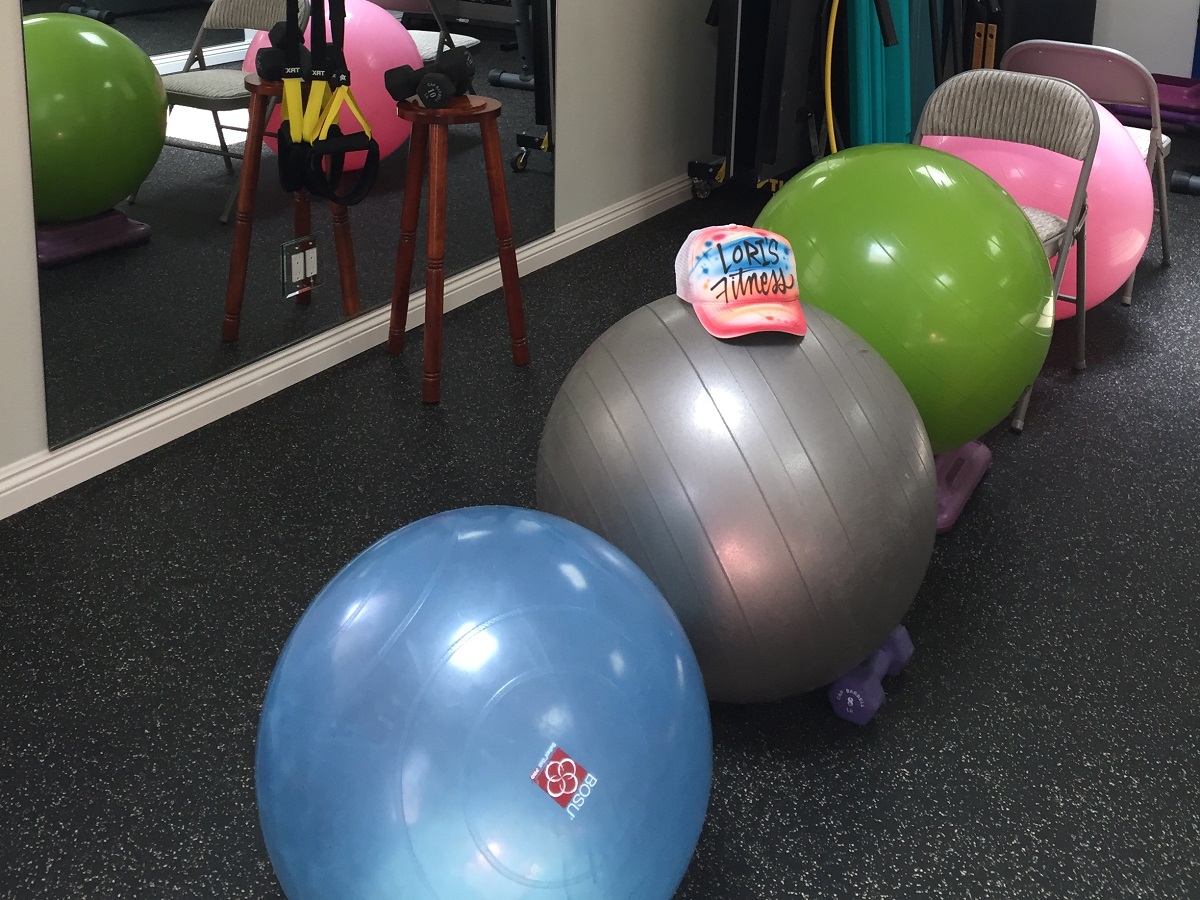
Utilizing a stability ball for lower body workouts can significantly enhance your training experience. The unstable surface of the ball challenges your core and stabilizers, leading to greater muscle activation and improved proprioception (body awareness). This translates to more effective workouts and a reduced risk of injury.
Lower Body Exercises on a Stability Ball
These exercises are designed to target various lower body muscle groups while incorporating the unique challenges of a stability ball. Proper form is crucial for maximizing benefits and minimizing risk.
Bulgarian Split Squat on Stability Ball
This exercise targets the quads, hamstrings, glutes, and calves. Maintaining balance on the ball enhances the engagement of stabilizing muscles.
- Position the stability ball behind you, with one leg resting on top. Maintain a straight line from your heels to your shoulders.
- Lower your body until your front knee is bent at a 90-degree angle.
- Push through your front heel to return to the starting position.
Modifications for difficulty include:
- Easier: Reduce the height of the ball for less instability.
- Harder: Increase the height of the ball or use a smaller ball for greater instability.
- Alternative: Perform the exercise without the ball for a more traditional split squat.
Comparing this to the traditional split squat, the stability ball version significantly increases the demand on core stabilization.
Stability Ball Lunges
This exercise works the quads, hamstrings, glutes, and calves, demanding more stabilization than a traditional lunge.
- Place the stability ball beneath your torso. Step forward with one leg, positioning your front foot flat on the floor.
- Lower your body until both knees are at a 90-degree angle. Ensure your front knee does not extend beyond your toes.
- Push through your front heel to return to the starting position. Repeat with the other leg.
Modifications for difficulty include:
- Easier: Reduce the height of the ball for less instability.
- Harder: Increase the height of the ball for greater instability.
- Alternative: Perform the exercise without the ball for a more traditional lunge.
The stability ball lunge challenges balance and stability more than a standard lunge.
Stability Ball Hamstring Curls
This exercise primarily targets the hamstrings and glutes.
- Lie face down with your heels resting on the stability ball. Keep your hips and torso straight.
- Engage your hamstrings to roll the ball towards your glutes, contracting the muscles.
- Lower the ball back to the starting position, controlling the movement.
Modifications for difficulty include:
- Easier: Perform the exercise with a smaller ball.
- Harder: Perform the exercise with your feet higher on the ball.
- Alternative: Perform traditional hamstring curls using a machine or resistance band.
The stability ball hamstring curl differs from traditional hamstring curls by requiring more core stabilization and control.
Benefits of Stability Ball Lower Body Workouts
Using a stability ball for lower body workouts enhances core strength, improves balance, and increases overall body awareness. It promotes functional strength, which translates to better performance in daily activities.
Precautions for Stability Ball Lower Body Workouts
- Proper Form: Maintain correct posture throughout each exercise.
- Gradual Progression: Start with a lower ball height and gradually increase as you improve stability.
- Listen to Your Body: Avoid pushing through pain.
- Warm-up and Cool-down: Essential for injury prevention.
- Proper Supervision: If you are unsure about proper form, seek guidance from a qualified fitness professional.
Using Stability Balls for Specific Needs
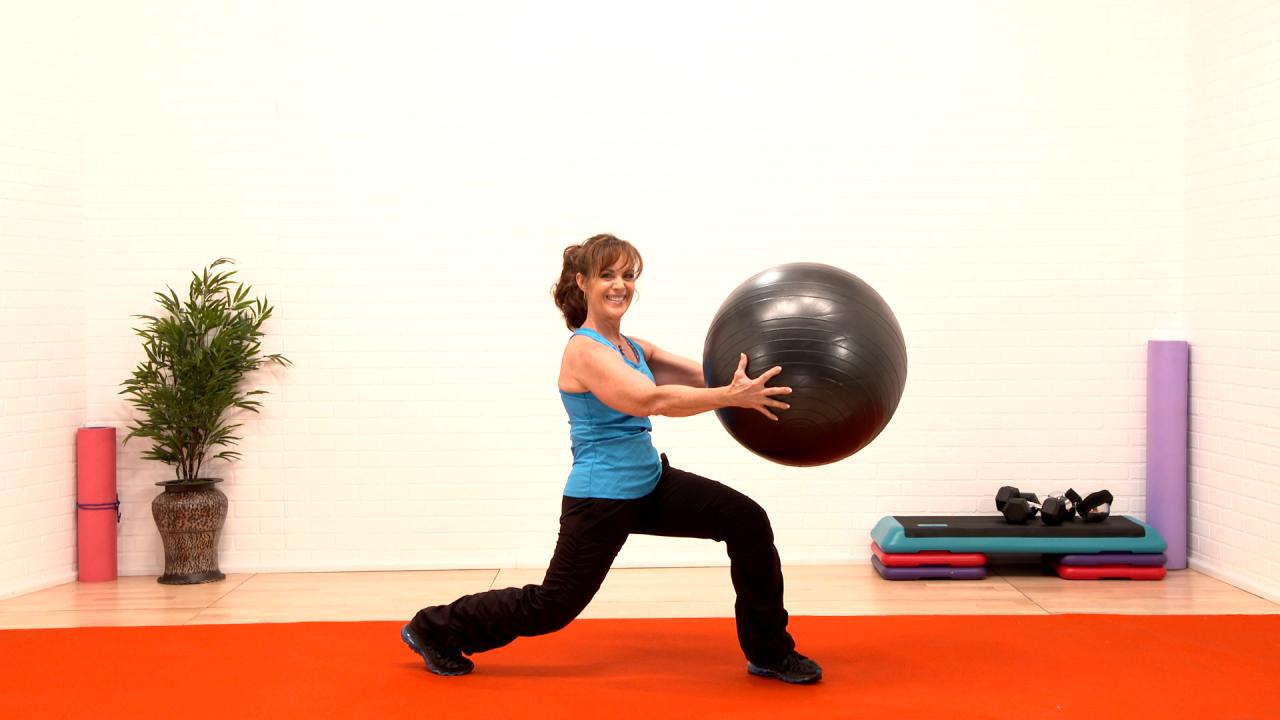
Stability balls offer a versatile and adaptable tool for enhancing physical well-being. Their unique instability encourages core engagement and promotes improved balance and posture. This section delves into how stability balls can be tailored to address specific needs, from rehabilitation to prenatal and postnatal care, and even for diverse age groups.
Rehabilitation Exercises
Stability balls provide a supportive yet challenging platform for rehabilitation exercises. Their dynamic nature helps strengthen muscles, improve range of motion, and restore functional movement patterns. Exercises on stability balls can be adapted to suit individual needs and recovery stages. This includes controlled movements and resistance training to facilitate healing and regain lost strength and flexibility.
Prenatal and Postnatal Exercises
Stability balls offer a safe and effective method for prenatal and postnatal exercises. The gentle yet engaging nature of these exercises can aid in maintaining core strength and pelvic floor stability during pregnancy and the postpartum period. Carefully selected exercises can also promote better posture and reduce discomfort associated with pregnancy. Post-delivery, stability ball exercises can assist in strengthening abdominal muscles and regaining pre-pregnancy fitness levels.
Incorporating Stability Balls into Yoga and Pilates
Stability balls can seamlessly integrate into yoga and Pilates routines. The added instability enhances core engagement and promotes balance during poses. For yoga, this can improve stability and deepen stretches. Pilates exercises on a stability ball can be adapted to focus on specific muscle groups, increase strength, and improve flexibility. Modified versions of core-strengthening and posture-correcting poses are often used in these routines.
Exercises for Back Pain
Stability balls are beneficial for individuals with back pain. Controlled movements on a stability ball help strengthen core muscles, which support the spine and reduce strain. Exercises tailored for back pain often involve controlled spinal flexion, extension, and rotation. Regular, monitored use of stability balls can promote a healthier spine and reduce the risk of future pain episodes.
Specific exercises such as seated back extensions and supine leg raises are often included.
Improving Posture
The instability of a stability ball encourages proper posture. To maintain balance, users naturally engage core muscles and stabilize their spine. Consistent use of stability balls can improve posture over time by strengthening the muscles that support good alignment. This results in reduced strain on the back and improved overall body mechanics.
Using Stability Balls for Different Age Groups
The use of stability balls can be adapted for various age groups. For children, stability balls can be used to promote balance and coordination. Older adults can use stability balls to improve balance, strength, and reduce the risk of falls. Exercises for each group must be tailored to their specific physical capabilities and limitations. A qualified physical therapist can advise on appropriate exercises and routines for each age group.
Safety and Precautions
Using a stability ball can enhance fitness and improve posture, but it’s crucial to understand and prioritize safety measures. Proper form and technique are paramount to prevent injuries and maximize benefits. Understanding potential risks and appropriate precautions for various physical conditions is essential for safe and effective use.
Importance of Proper Form and Technique
Maintaining correct posture and form is critical when using a stability ball. Incorrect form can lead to strain on muscles, joints, and ligaments, increasing the risk of injury. Exercises should be performed slowly and deliberately, focusing on controlled movements. Each movement should be visualized and performed mindfully. A proper stance and a balanced position on the ball are crucial.
A qualified instructor or physical therapist can provide guidance on correct form, particularly for beginners.
Potential Risks and Injuries
Stability balls, while beneficial, present potential risks. Overexertion, improper form, and sudden movements can lead to various injuries. These include muscle strains, sprains, back pain, neck pain, and even head injuries in extreme cases. Individuals with pre-existing medical conditions or injuries should consult a healthcare professional before incorporating stability ball exercises into their routine. The potential for falling is also a consideration, and proper precautions should be taken to prevent this risk.
Precautions for Different Physical Conditions
Individuals with specific physical conditions should exercise caution when using stability balls. For example, those with back problems should consult a physician before using stability balls. Modified exercises, under the supervision of a physical therapist, may be necessary. Individuals with balance issues should start with simple exercises and gradually increase the complexity as balance improves. People with arthritis or joint pain should use the ball cautiously, ensuring the exercises do not exacerbate their condition.
Individuals with osteoporosis should avoid exercises that involve high impact or sudden movements on the stability ball.
Selecting the Right Stability Ball Size
The appropriate stability ball size is crucial for effective and safe use. A ball that is too small or too large can compromise balance and increase the risk of injury. The size should be selected based on height and weight, and it’s recommended to consult a physical therapist or fitness professional for personalized guidance. The ball should allow for a comfortable, stable position with minimal difficulty in maintaining balance.
Maintaining Stability Ball Condition
Regular maintenance ensures the stability ball’s optimal condition and longevity. Inspect the ball regularly for any signs of damage, such as punctures or leaks. Proper storage is also important to prevent damage. Storing the ball in a cool, dry place, away from direct sunlight, will help maintain its integrity. Avoid dropping or impacting the ball, which can lead to damage or loss of air pressure.
Table of Potential Injuries and Prevention
| Potential Injury | Cause | Prevention |
|---|---|---|
| Muscle Strains | Overexertion, improper form, sudden movements | Gradual progression of exercises, maintaining proper form, adequate warm-up |
| Sprains | Sudden twisting or jerking movements, lack of support | Gradual increase in intensity, using proper technique, ensuring adequate support |
| Back Pain | Incorrect posture, excessive spinal flexion or extension | Maintaining proper spinal alignment, using support when needed, consulting a physical therapist |
| Neck Pain | Overexertion, poor posture, improper neck alignment | Slow and controlled movements, ensuring proper neck alignment, avoiding hyperextension |
| Head Injury | Falls, collisions, sudden movements | Using appropriate safety measures, ensuring a stable environment, avoiding high-impact exercises |
Advanced Stability Ball Exercises
Elevating your stability ball routine to more challenging exercises can significantly enhance core strength, balance, and overall fitness. These advanced exercises build upon foundational techniques, pushing your body to work harder and adapt to increasingly complex movements. This section explores three advanced exercises, highlighting their benefits, challenges, and modifications for beginners, while emphasizing the importance of progressive overload.
Advanced Exercises
These advanced exercises demand a higher level of core engagement, balance, and coordination compared to basic exercises. Proper form and controlled movements are crucial to avoid injury and maximize the benefits. Each exercise should be performed with a focus on maintaining stability and controlled breathing.
Single-Leg Romanian Deadlift (RLD) with Stability Ball
This exercise enhances hamstring strength, glute activation, and core stability. By incorporating the stability ball, you increase the instability and demand on your core muscles to maintain balance.
- Start with your feet hip-width apart, one foot on the stability ball, and the other foot flat on the ground. Maintain a slight bend in your knees.
- Keeping your back straight and core engaged, slowly hinge at your hips, extending one leg backward while maintaining balance on the ball. The extended leg should be straight but not locked.
- Lower the weight until you feel a stretch in your hamstring. Return to the starting position, controlling the movement.
- Repeat for the desired number of repetitions and then switch legs.
Benefits
This exercise targets the posterior chain, improving posture and reducing the risk of lower back pain. It also enhances balance and coordination.
Challenges
Maintaining balance on the stability ball, especially with the extended leg, can be challenging. Lack of core strength and hamstring flexibility can make this exercise difficult.
Beginner Modifications
Beginners can perform the exercise with their non-ball foot on the ground or a bench. This provides greater stability.
Stability Ball Russian Twists
This exercise targets oblique muscles and improves core rotation. The stability ball increases the difficulty of the traditional Russian twist by demanding greater stability and core engagement.
- Lie back on the stability ball with your knees bent and feet flat on the floor. Place your hands behind your head.
- Engage your core and slowly lift your feet off the ground, maintaining a controlled movement.
- Slowly twist your torso from side to side, keeping your core engaged throughout the movement. Focus on controlled breathing.
- Repeat for the desired number of repetitions.
Benefits
This exercise targets the oblique muscles, improving core strength and stability. It also enhances rotational power.
Challenges
Maintaining balance on the stability ball while rotating your torso can be challenging, especially for those with limited core strength. Proper form and controlled movement are essential to avoid injury.
Beginner Modifications
Keep your feet on the ground or a bench, reducing the instability and making the exercise more manageable.
Stability Ball Mountain Climbers
This exercise engages the entire body, working the core, shoulders, and legs. The instability of the ball further challenges the stability muscles.
- Start in a plank position with your hands on the stability ball, keeping your body in a straight line from head to heels.
- Bring one knee towards your chest, alternating legs quickly, mimicking a running motion.
- Maintain a steady pace and ensure your core remains engaged throughout the exercise.
- Repeat for the desired number of repetitions.
Benefits
This exercise enhances cardiovascular fitness, builds core strength, and improves overall body awareness.
Challenges
Maintaining a stable plank position on the unstable surface of the ball is demanding. It requires significant core strength and coordination.
Beginner Modifications
Perform the exercise on the floor instead of the stability ball, reducing the instability.
Progressive Overload
Progressive overload is essential for maximizing results in any exercise program. Gradually increasing the difficulty or volume of your stability ball exercises over time challenges your muscles and leads to improved strength and endurance. This principle applies to advanced exercises as well.
Modification Table
| Level | Exercise | Description |
|---|---|---|
| Beginner | Single-Leg Romanian Deadlift (RLD) | Perform the exercise with the non-ball foot on a bench or the floor. |
| Beginner | Stability Ball Russian Twists | Keep feet on the ground or a bench. |
| Beginner | Stability Ball Mountain Climbers | Perform the exercise on the floor. |
| Intermediate | Single-Leg Romanian Deadlift (RLD) | Perform the exercise on a stability ball. |
| Intermediate | Stability Ball Russian Twists | Perform the exercise with feet elevated slightly. |
| Intermediate | Stability Ball Mountain Climbers | Perform the exercise on a stability ball with hands closer together. |
| Advanced | Single-Leg Romanian Deadlift (RLD) | Perform the exercise on a stability ball with extended leg. |
| Advanced | Stability Ball Russian Twists | Perform the exercise with feet off the ground. |
| Advanced | Stability Ball Mountain Climbers | Perform the exercise on a stability ball with hands on the ball. |
Conclusive Thoughts
In conclusion, this guide has equipped you with the knowledge and practical skills to confidently incorporate stability balls into your fitness routine. Remember to prioritize proper form, listen to your body, and adjust exercises based on your fitness level. By following these guidelines, you can safely and effectively maximize the benefits of stability ball workouts and achieve your fitness goals.